BEGIN:VCALENDAR
VERSION:2.0
PRODID:-//Department of Neuroscience//NONSGML Events//EN
CALSCALE:GREGORIAN
X-ORIGINAL-URL:https://neuroscience.wustl.edu/events/
X-WR-CALDESC:Department of Neuroscience - Events
BEGIN:VEVENT
UID:20210829T0235Z-1630204516.5746-EO-7654-1@172.23.128.19
STATUS:CONFIRMED
DTSTAMP:20260518T091217Z
CREATED:20210812T204212Z
LAST-MODIFIED:20211012T202558Z
DTSTART;TZID=America/Chicago:20211013T120000
DTEND;TZID=America/Chicago:20211013T130000
SUMMARY: Climate Change and the Social Brain\, Michael Platt\, PhD (Perelma
 n School of Medicine\, University of Pennsylvania)
DESCRIPTION: Michael Platt\, PhD\, is the James S. Riepe University Profess
 or in the Department of Neuroscience at the Perelman School of Medicine\, U
 niversity of Pennsylvania.
X-ALT-DESC;FMTTYPE=text/html: <p><img class="alignright size-medium wp-imag
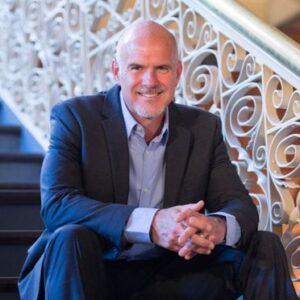
 e-7657" src="https://neuroscience.wustl.edu/app/uploads/2021/08/Headshot-Pl
 att-300x300.jpg" alt="michael platt" width="300" height="300" /></p><p><a h
 ref="http://plattlabs.rocks/" target="_blank" rel="noopener">Michael Platt<
 /a>\, PhD<br />James S. Riepe University Professor<br />Department of Neuro
 science<br />Perelman School of Medicine\, University of Pennsylvania</p><p
 ><strong>Hosted by:</strong> Kari Allen</p><p>Virtual event<br />Zoom webin
 ar link: <a href="https://wustl.zoom.us/j/95150989010" target="_blank" rel=
 "noopener">https://wustl.zoom.us/j/95150989010</a></p><p><span class="TextR
 un SCXW211734143 BCX0" lang="EN-US" xml:lang="EN-US" data-contrast="auto"><
 span class="NormalTextRun SCXW211734143 BCX0">Deeper and more numerous </sp
 an><span class="NormalTextRun SCXW211734143 BCX0">social connections</span>
 <span class="NormalTextRun SCXW211734143 BCX0"> promote</span><span class="
 NormalTextRun SCXW211734143 BCX0"> health\, </span><span class="NormalTextR
 un SCXW211734143 BCX0">well-being\, survival\, and even financial success. 
 By the same token\, s</span><span class="NormalTextRun SCXW211734143 BCX0">
 ocial exclusion </span><span class="NormalTextRun SCXW211734143 BCX0">and</
 span><span class="NormalTextRun SCXW211734143 BCX0"> the loss of social par
 tners result in feelings </span><span class="NormalTextRun SCXW211734143 BC
 X0">similar</span><span class="NormalTextRun SCXW211734143 BCX0"> to physic
 al pain</span><span class="NormalTextRun SCXW211734143 BCX0">.</span><span 
 class="NormalTextRun SCXW211734143 BCX0"> </span><span class="NormalTextRun
  SCXW211734143 BCX0">In my talk\, I will discuss our work </span><span clas
 s="NormalTextRun SCXW211734143 BCX0">aimed at defining</span><span class="N
 ormalTextRun SCXW211734143 BCX0"> the biological mechanisms </span><span cl
 ass="NormalTextRun SCXW211734143 BCX0">that mediate</span><span class="Norm
 alTextRun SCXW211734143 BCX0"> our ability and desire to connect</span><spa
 n class="NormalTextRun SCXW211734143 BCX0"> and the impact of these capacit
 ies on resilience</span><span class="NormalTextRun SCXW211734143 BCX0">. </
 span></span></p><p><span class="TextRun SCXW211734143 BCX0" lang="EN-US" xm
 l:lang="EN-US" data-contrast="auto"><span class="NormalTextRun SCXW21173414
 3 BCX0">We leverage</span><span class="NormalTextRun SCXW211734143 BCX0"> a
  unique 1</span><span class="NormalTextRun SCXW211734143 BCX0">4</span><spa
 n class="NormalTextRun SCXW211734143 BCX0">-</span><span class="NormalTextR
 un SCXW211734143 BCX0">year field study of thousands of free-ranging rhesus
  macaques and a biobank including genomic\, neuroanatomical\, and brain tra
 nscriptomic data</span><span class="NormalTextRun SCXW211734143 BCX0">\, co
 llected before and after </span><span class="NormalTextRun SCXW211734143 BC
 X0">a </span><span class="NormalTextRun SCXW211734143 BCX0">major cyclone</
 span><span class="NormalTextRun SCXW211734143 BCX0">\, and parallel neuroph
 ysiological and pharmacological work in the laboratory</span><span class="N
 ormalTextRun SCXW211734143 BCX0">.</span><span class="NormalTextRun SCXW211
 734143 BCX0"> </span><span class="NormalTextRun SCXW211734143 BCX0">We</spa
 n><span class="NormalTextRun SCXW211734143 BCX0"> find </span><span class="
 NormalTextRun SCXW211734143 BCX0">that </span><span class="NormalTextRun SC
 XW211734143 BCX0">monkeys who have more friends are more successful and sho
 w increased</span><span class="NormalTextRun SCXW211734143 BCX0"> </span><s
 pan class="NormalTextRun SCXW211734143 BCX0">gene expression and </span><sp
 an class="NormalTextRun SCXW211734143 BCX0">structural connectivity</span><
 span class="NormalTextRun SCXW211734143 BCX0"> </span><span class="NormalTe
 xtRun SCXW211734143 BCX0">with</span><span class="NormalTextRun SCXW2117341
 43 BCX0">in </span><span class="NormalTextRun SCXW211734143 BCX0">the socia
 l brain network</span><span class="NormalTextRun SCXW211734143 BCX0">\, par
 ticularly the middle superior temporal sulcus (</span><span class="Spelling
 Error SCXW211734143 BCX0">mSTS</span><span class="NormalTextRun SCXW2117341
 43 BCX0">). </span></span></p><p><span class="TextRun SCXW211734143 BCX0" l
 ang="EN-US" xml:lang="EN-US" data-contrast="auto"><span class="NormalTextRu
 n SCXW211734143 BCX0">Neurophysiological studies in our lab show </span><sp
 an class="SpellingError SCXW211734143 BCX0">mSTS</span><span class="NormalT
 extRun SCXW211734143 BCX0"> neurons encode a rich array of strategic inform
 ation necessary to guide social decisions like cooperation</span><span clas
 s="NormalTextRun SCXW211734143 BCX0">. </span><span class="NormalTextRun SC
 XW211734143 BCX0">Pharmacologically inactivating </span><span class="Spelli
 ngError SCXW211734143 BCX0">mSTS</span><span class="NormalTextRun SCXW21173
 4143 BCX0"> impairs the sophistication of social interactions. In the field
 \, m</span><span class="NormalTextRun SCXW211734143 BCX0">onkeys who lived 
 through the cyclone showed upregulation of aging-related genes in immune an
 d inflammatory pathways</span><span class="NormalTextRun SCXW211734143 BCX0
 ">\, accompanied by physical decline</span><span class="NormalTextRun SCXW2
 11734143 BCX0">. Behaviorally\, monkeys responded to the acute and chronic 
 stress of the cyclone by becoming more social and less aggressive. Current 
 work aims to determine whether biological </span><span class="NormalTextRun
  SCXW211734143 BCX0">predispositions for social connections shape resilienc
 e to climate-induced stressors.</span></span><span class="EOP SCXW211734143
  BCX0" data-ccp-props="{"335551550":6\,"335551620":6}"> </span></p><p><a hr
 ef="https://neuroscience.wustl.edu/news-events/events/">Return to events ca
 lendar »</a></p>
CATEGORIES:Seminar Series
ORGANIZER;CN="Brian":MAILTO:bmarston@wustl.edu
URL;VALUE=URI:https://neuroscience.wustl.edu/events/event/climate-change-an
 d-the-social-brain-michael-platt/
END:VEVENT
BEGIN:VTIMEZONE
TZID:America/Chicago
BEGIN:DAYLIGHT
TZOFFSETFROM:-0600
TZOFFSETTO:-0500
DTSTART:20210314T080000
TZNAME:CDT
END:DAYLIGHT
END:VTIMEZONE
END:VCALENDAR
