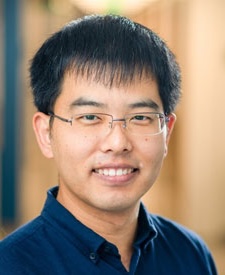
Assistant Professor
Department of Neuroscience
The Scri pps Research Institute
C
hen Ran\, PhD
Assistant Professor
Department of Neuroscience
The Scri
pps Research Institute
Our senses of sight\, smell\, taste\, touch an d hearing allow us to perceive the external physical world. The internal se nsory systems\, by contrast\, enable the brain to receive signals from with in the body to generate our internal senses\, such as hunger\, satiety\, th irst\, nausea\, hypoxia and visceral pain. How does the brain differentiate hunger pangs from the feeling of fullness? Or the sense of nausea when tox ins are ingested? Why does stomach stretch lead to satiety while bladder st retch produces the urge to urinate?
To understand these questions\, t he Chan Lab developed a novel in vivo two-photon mouse brainstem calcium im aging platform. This system allowed them\, for the first time\, to record t he activities of thousands of neurons\, with single-cell resolution\, in th e brain’s gateway to the internal organs. The lab delivered different types of stimuli in the animal's internal organs\, mimicking the stretch of the stomach\, ingestion of nutrients\, pain in the organs and many others\, and watched how different populations of neurons respond to these stimuli. The lab's previous work revealed that internal organs are topographically repr esented in the brainstem\, forming a “visceral homunculus."
Combining in vivo functional imaging\, electrophysiological recordings and mouse gen etics\, neuronal activity manipulation (optogenetics\, chemogenetics)\, ani mal behavior\, neural circuit tracing and others\, the lab will unravel how the nervous system detects mechanical\, chemical and thermal stimuli from the periphery to synthesize our internal sensations\, such as satiety\, hun ger\, nausea\, hypoxia and visceral pain. Discoveries from the lab's resear ch will reveal basic principles of how the brain encodes and processes info rmation and shed light on the development of novel therapeutics for treatin g hypertension\, obesity\, diabetes\, indigestion\, eating disorders\, pulm onary diseases\, nausea\, visceral pain\, infection-induced sickness behavi ors and many others.
CATEGORIES:Seminar Series LOCATION:Neuroscience Research Building Auditorium GEO:38.635602;-90.254892 ORGANIZER;CN="Shea":MAILTO:shea.stewart@wustl.edu URL;VALUE=URI:https://neuroscience.wustl.edu/events/event/department-of-neu roscience-seminar-chen-ran/ END:VEVENT BEGIN:VTIMEZONE TZID:America/Chicago BEGIN:STANDARD TZOFFSETFROM:-0500 TZOFFSETTO:-0600 DTSTART:20251102T070000 TZNAME:CST END:STANDARD END:VTIMEZONE END:VCALENDAR