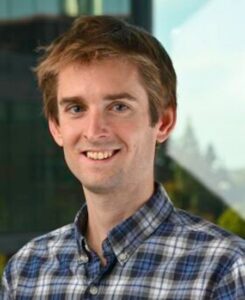
Assistant Professor of Genetics
WashU Me dicine
Frederick Arnold\, Ph
D
Assistant Professor of Genetics
WashU Me
dicine
Nuclear depletion and cytoplasmic aggregation of the RNA-bindi ng protein TDP-43 are defining features of amyotrophic lateral sclerosis (A LS) and frontotemporal dementia (FTD). While TDP-43–dependent splicing regu lation is well established\, its role in alternative polyadenylation (APA) and 3′ untranslated region (3′UTR) regulation was comparatively understudie d until recently. Using RNA-seq datasets from multiple cellular models of T DP-43 dysfunction\, combined with neuronal nuclei isolated from postmortem ALS and FTD cortex\, we found that loss of nuclear TDP-43 resulted in wides pread shifts in polyadenylation site usage\, affecting hundreds of genes. T hese changes were highly enriched among transcripts directly bound by TDP-4 3 and were characterized predominantly by increased use of distal polyadeny lation sites\, leading to 3′UTR lengthening.
By characterizing this n ew category of TDP-43-regulated genes\, we have uncovered several new bioma rker and therapeutic targets for ALS/FTD and other ‘TDP-43 proteinopathies\ ,’ we were are actively investigating in the lab.
CATEGORIES:Seminar Series LOCATION:Neuroscience Research Building Auditorium GEO:38.635602;-90.254892 ORGANIZER;CN="Shea":MAILTO:shea.stewart@wustl.edu URL;VALUE=URI:https://neuroscience.wustl.edu/events/event/department-of-neu roscience-seminar-frederick-arnold/ END:VEVENT BEGIN:VTIMEZONE TZID:America/Chicago BEGIN:STANDARD TZOFFSETFROM:-0500 TZOFFSETTO:-0600 DTSTART:20251102T070000 TZNAME:CST END:STANDARD END:VTIMEZONE END:VCALENDAR