Harrison Gabel, PhD, collaborative partnership awarded grant through 2025 Natural History Study Small Grant Program.
Natural history grants boost efforts in rare genetic syndromes (Links to an external site)

Harrison Gabel, PhD, collaborative partnership awarded grant through 2025 Natural History Study Small Grant Program.

Harrison Gabel, PhD, and Hysell Oviedo, PhD, are part of a team of WashU Medicine researchers who have received an $11.85 million NIH grant.

Jason Yi, PhD, received a $400,000 pilot grant from the Eagles Autism Foundation to advance a new approach to treating autism spectrum disorder.
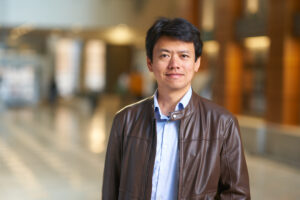
Cheng Huang, PhD, has won a Whitehall Foundation grant to study the neural mechanisms of prediction using Drosophila (fruit flies) as a powerful model to understand analogous processes in the human brain.
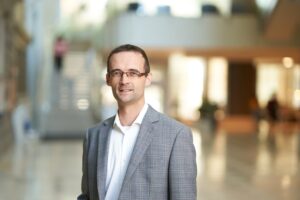
Tom Franken, MD, PhD, has received a Young Investigator Grant from the Brain & Behavior Research Foundation (BBRF) to fund a new direction in his research on the neural mechanisms of perception.
Zahra Dhanerawala, an MD/PhD student in the lab of Edward Han, PhD, was awarded an American Heart Association (AHA) Predoctoral Fellowship to further her research into the connection between the hippocampus and memory.
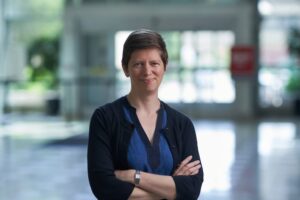
Martha Bagnall, PhD, is the principal investigator on a $5.2 million NIH grant involving collaborators at four universities.
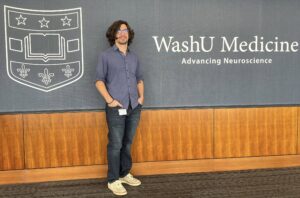
Leandro Fosque, a postdoctoral fellow in the Center for Theoretical & Computational Neuroscience (CTCN) at Washington University, has been awarded an F32 Ruth L. Kirschstein Postdoctoral Individual National Research Service Award.
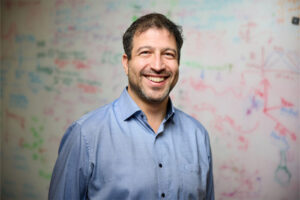
Adam Kepecs, PhD, a professor of neuroscience and a professor of psychiatry at WashU Medicine, has been selected for a National Institutes of Health (NIH) Director’s Pioneer Award, to study how the brain’s neural circuits decode signals from the immune system and orchestrate adjustments in behavior and motivation.
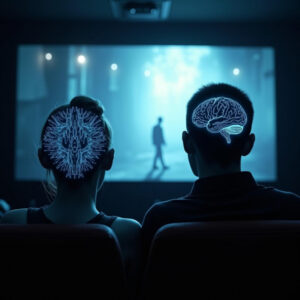
WashU assistant professor of neuroscience Tom Franken and professor of physics Ralf Wessel have secured a $427,625 grant from the National Institutes of Health to study how artificial neural networks and primate brains process and predict video imagery.