Single Cell Resolution Connectomes of Mammalian Brains
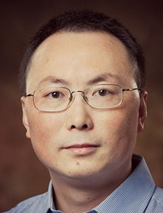
Hanchuan Peng, PhD
Dean, Professor, Doctoral Supervisor
Fudan University Brain Intelligence Research Institute
“In this talk, I will discuss several approaches we have recently developed for reconstructing mammalian brain connectomes at single cell resolution. Conventional approaches to this problem are fundamentally constrained by multiple factors, including the extreme disparity in scale between whole brains and individual neurons, the structural complexity of neuronal arborization and long range projections, the dense and intricate wiring between neuron pairs, and substantial challenges in sample preparation, imaging and data acquisition. Additional difficulties arise from data management, large scale processing, and downstream analysis. Our approach instead explores the separability of neuronal classes and the underlying principles that enable such separation. In particular, we introduce two dimension increasing techniques that enhance the distinguishability of neuronal classes based on their long range axonal connectivity patterns and local dendritic microenvironments. We tested this framework using whole mouse brain scale single neuron reconstructions. We further developed statistical methods that support brain-wide reconstruction of single-neuron connectomes and the classification of post-synaptic wiring patterns across major neuron types. If time permits I would also describe ongoing efforts to extend and validate this approach in human brain datasets.”
Dr. Hanchuan Peng is a leading computational neuroscientist internationally recognized for his contributions to large-scale brain mapping, neuroinformatics, and intelligent bioimage analysis. He is currently active as a senior research leader in whole-brain cellular reconstruction and data-driven neuroscience, with long-standing involvement in major international brain initiatives, including establishing Fudan University’s Institute for Brain and Intelligence, the SEU-ALLEN Joint Research Center, and previous work associated with the Allen Institute for Brain Science and Janelia, HHMI. His research centers on developing scalable computational and AI-based methods for neuron reconstruction, morphology quantification, and cross-modal integration of imaging and anatomical data. Peng is the creator of widely used open-source platforms such as Vaa3D, which continue to evolve to support high-throughput, automated analysis of massive neuroscience datasets. In recent years, his efforts have increasingly emphasized standardization, reproducibility, and community-driven data sharing, helping to enable collaborative, brain-wide cell-type characterization and digital atlas construction at unprecedented scale. Dr. Peng also proposed and led the Big-Neuron Initiative and played a key role in establishing the research field of bioimage informatics