Join the WashU Medicine Department of Neuroscience on Sept. 8-9 for the David Van Essen Symposium: Insights Into the Cortex, a tribute to the 80th birthday of Van Essen.
David Van Essen Symposium: Insights Into Cortex

Join the WashU Medicine Department of Neuroscience on Sept. 8-9 for the David Van Essen Symposium: Insights Into the Cortex, a tribute to the 80th birthday of Van Essen.

Jason Yi, PhD, an assistant professor of neuroscience, is acknowledged for his work with the Angelman Syndrome Foundation and his hands-on, compassionate approach to the syndrome’s community.

Christina Gurnett, MD, PhD, and Lawrence Salkoff, PhD, are lead authors on a case report that describes how Prozac can be used in the treatment of children with rare forms of epilepsy.

Study in mice shows motivation can be restored with targeted treatments.

In a study published April 11 in Science, Adam Kepecs, PhD, and other WashU Medicine researchers report they discovered a previously unrecognized pathway in the brain that senses inflammation and actively suppresses dopamine — a key driver of motivation — resulting in apathy and loss of drive.

Hysell Oviedo, PhD, has been installed as the Roger M. Perlmutter Career Development Assistant Professor of Biomedical Research.
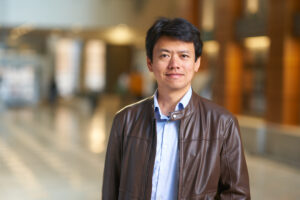
Cheng Huang, PhD, has won a Whitehall Foundation grant to study the neural mechanisms of prediction using Drosophila (fruit flies) as a powerful model to understand analogous processes in the human brain.

Tom Franken, MD, PhD, has received a Young Investigator Grant from the Brain & Behavior Research Foundation (BBRF) to fund a new direction in his research on the neural mechanisms of perception.
![Figure 2. Diagram of a Kv3 potassium channel subunit and the location of the V473A variant. (A) Kv3 subunit with 6 transmembrane domains. P indicates the pore domain governing the ion selectivity of the channel. The colored filled circles in S6 represent selected dominant gain-of-function variants in Kv3.1 and Kv3.2. The KV3.2 V473A variant is located near the cytoplasmic opening of the channel pore (red). Kv3.1 variants: 1) V425M, 3) M430I, 4) V432M, 5) V434L (Ambrosino et al., 2023); KV3.2 variants: 2) I465V, 6) V471L (Li et al., 2022; Schwarz et al., 2022), 7) V473A (Schwarz et al., 2022) (which is the topic of this study). (B) Position of WT V473 and V473A variant on S6 in the Kv3.2 channel structure. The WT V473 (red) is located near the cytoplasmic mouth of the channel and may be important in stabilizing the closed structure (left image). The variant V473A is shown in the right image (red). Structures of human Kv3.2 were based on the cryo-EM structure of the highly similar paralog, Kv3.1, where the S6 amino acid sequence is identical for Kv3.1 and Kv3.2. The residue position V436 in the Kv3.1 sequence is equivalent to residue V473 in Kv3.2 [P48547 KCNC1 compared to Q96PR1 KCNC2 - UniProt]. The images of human Kv3.1 structure were prepared in UCSF Chimera (Pettersen et al., 2004). The V436A (V473A) variation in the Kv3.1 (Kv3.2) structure was generated from the WT Kv3.1 cryo-EM structure (PDB: 7PHH) by replacing V436 with Alanine using the Swapaa function in UCSF Chimera (right image).](https://neuroscience.wustl.edu/app/uploads/2025/02/fphar-15-1528541-g002-286x300.jpg)
In Frontiers in Pharmacology, Lawrence Salkoff, PhD, and colleagues report how norfluoxetine, a long-lasting metabolite of fluoxetine that may accumulate in the brain at greater concentrations than fluoxetine itself in patients treated with fluoxetine, is most likely the agent bringing relief to the patients.

Zahra Dhanerawala, an MD/PhD student in the lab of Edward Han, PhD, was awarded an American Heart Association (AHA) Predoctoral Fellowship to further her research into the connection between the hippocampus and memory.