Joanna Jankowsky, PhD, joins WashU Neuroscience.
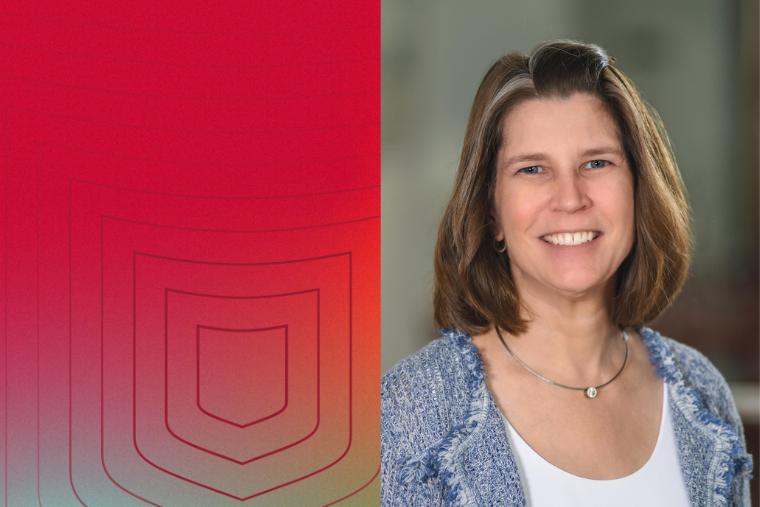
During a winter break from graduate studies at California Institute of Technology, Joanna Jankowsky found herself at a neighbor’s Christmas party answering the question, “What are you studying?” When she replied “epilepsy,” the conversation came alive.
“Their eyes lit up,” Jankowsky said. “She and her son were intrigued because her daughter had recently had a seizure, and it had affected the entire family. The son lived in fear that it would happen again, and he wouldn’t know what to do. The daughter was 16 but couldn’t learn to drive yet — she had to be seizure-free for six months before getting behind the wheel. It had changed their whole family dynamic.”
Back at Caltech, Jankowsky continued her graduate research on neuronal activity but found herself increasingly drawn to neurological diseases. After completing her PhD, she moved to Johns Hopkins University School of Medicine for postdoctoral training in neuropathology, where she first began the Alzheimer’s disease research that remains the focus of her lab today.
After several years at Hopkins, marriage brought her back to the West Coast, where she worked as a senior research associate at Caltech, continuing her Alzheimer’s research. In 2008, she and her husband, Andy Groves, PhD, accepted faculty positions at the Baylor College of Medicine, where they spent the next 17 years.
At Baylor, Jankowsky advanced through the ranks and was named the Vivian L. Smith Endowed Chair in Neuroscience in 2019, with secondary appointments in Molecular and Cellular Biology, Neurosurgery, and Neurology, as well as the Huffington Center on Aging. She also served for eight years as associate director of the Graduate Program in Neuroscience, overseeing the progress of more than 70 students at any given time and serving on nearly 50 thesis committees.
In May, Jankowsky joined the Department of Neuroscience at WashU Medicine as a professor of neuroscience, following her husband, who became the new head of the Department of Developmental Biology. Jankowsky has been endowed the Theodore and Bertha Bryan Professor of Environmental Medicine.
Research beginnings and new ventures
The Jankowsky Lab focuses on understanding the pathogenesis of Alzheimer’s. The team develops genetically engineered mouse models that allow them and scientists worldwide to study how risk factors influence disease biology and test potential interventions.
Her interest in mouse models began during her postdoctoral work with David Borchelt, PhD, at Johns Hopkins. She recalls being inspired by a Caltech seminar from Mark Gurney, PhD, who described creating the first mouse model of ALS by overexpressing a mutated human gene.
“When I heard that, I was hooked,” Jankowsky said. “At Hopkins, there was a big group building models for Alzheimer’s, ALS and Huntington’s disease. I joined during the second generation of these models — when we started combining alleles and developing ways to control them genetically.”
Jankowsky went on to co-develop the widely used APP/PS1 bigenic mouse model for Alzheimer’s amyloidosis. Following Borchelt’s example, she has made her models freely available.
“Dave didn’t attach any strings to his generosity,” she said. “That was an important lesson: share the data, share the mice, share the results. You get more goodwill back by sharing freely. Being a good scientific citizen was more important to him than getting credit.”
The Jankowsky Lab continues to study the basic biology of Alzheimer’s, explore the impact of newly identified genetic modifiers and investigate unconventional strategies for intervention with approaches that can be debugged or debunked most efficiently in a laboratory setting.
Beyond her research, Jankowsky is recognized for her teaching and mentorship. She won several awards as best lecturer at the Baylor College of Medicine Graduate School and helped develop several new neuroscience graduate courses. In her lab, she takes a holistic approach to mentoring.
“I want my lab members to understand every part of their research project, from start to finish,” she said. “And I want them to value sharing what they’ve learned, to explore new ideas and to build their own collaborations.”
With its strong Alzheimer’s research community and collaborative culture, WashU offers an ideal new home for her team, Jankowsky said.“Some of the best work on Alzheimer’s is happening here,” she said. “We’re excited to be part of it and look forward to new collaborations and great science.”