Inaugural live podcast recording of Disrupt Neuroscience brings together great minds from across St. Louis in science, innovation, and entrepreneurship
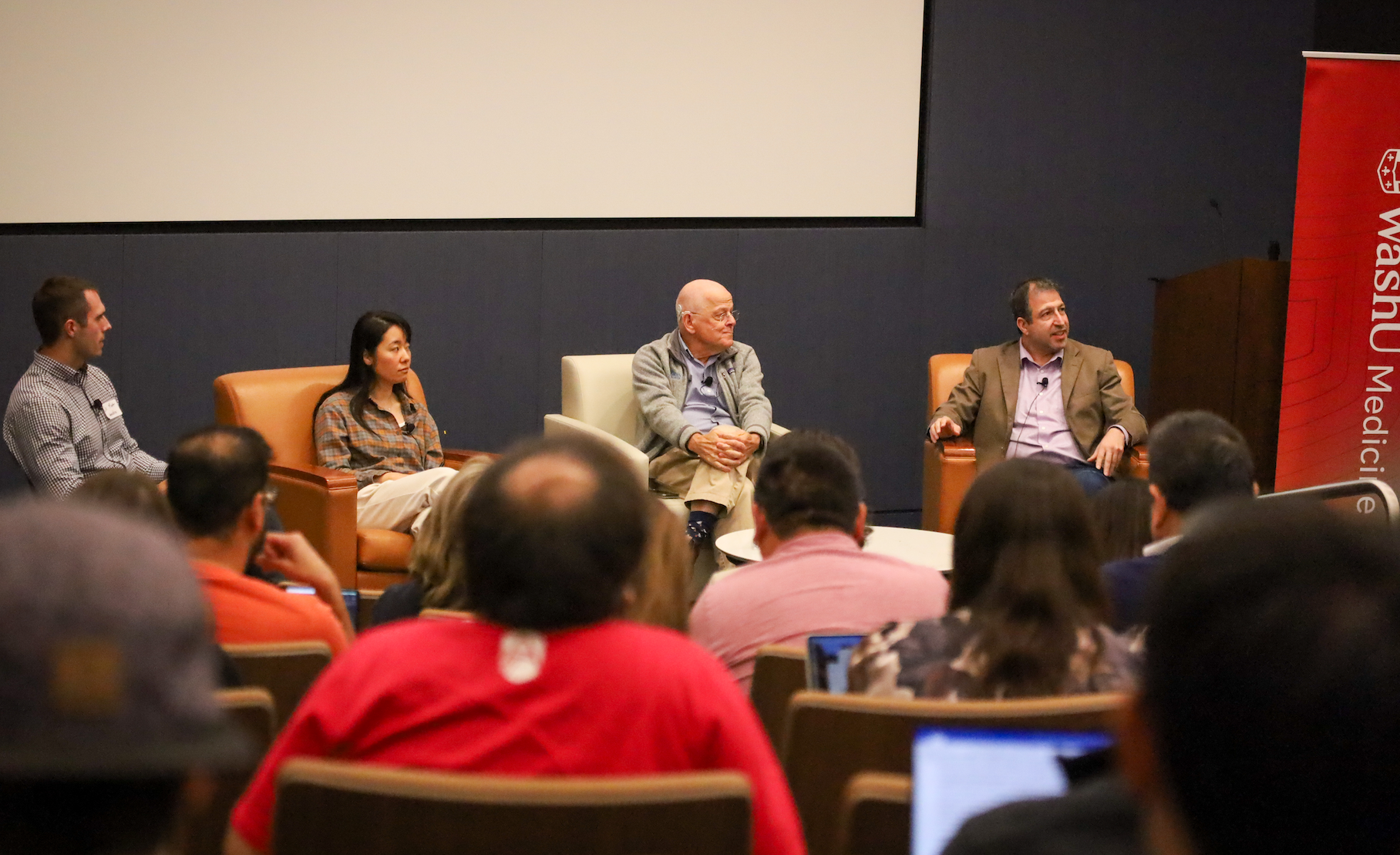
The air bristled with anticipation. Colleagues whispered in corners over their lunch. Introductions echoed across the rows of seats. Old friends waved across the room. New and familiar faces filled the auditorium at Fort Labs on Friday, October 23rd.
As the panelists took their seats at the front of the room, and the host picked up a microphone, everyone gathered up their things, muttered a few we’ll talk later’s, and shuffled to their seats. For the first time in over half an hour, the room fell quiet.
Our host, Matthew Gaidica, Ph.D., looked out across the audience admiring the community that had gathered to share in his vision, manifested in this event: developing fearless innovators.
This was the inaugural live recording of the podcast Disrupt Neuroscience.
“We’re at a time where technological innovation is uncertain, but also exciting,” Dr. Gaidica said. “This disruption can impact us in a few ways – we can either be disrupted by it, or we can be disruptive ourselves.”

Creating connections to build a community
Dr. Gaidica is an assistant professor in the Department of Neuroscience as well as director of Neuroscience Innovation and the Neurotech Hub – making him the ideal person to orchestrate this event, and interview the scientific entrepreneurs featured in this podcast.
The recording began with a message from Linda Richards, Ph.D., chair of the Department of Neuroscience. She described the long-term goals of the department: to build the number one neuroscience ecosystem in the country.
“The vision is to drive discoveries,” she said. “And to have those discoveries translated into products, therapies, services, and new AI algorithms.”
How does the department plan to do this? By fostering connections between the experts and innovators across St. Louis – essentially, building a community that is equipped to make this vision a reality.
Disrupt Neuroscience was the first step to this community creation. Luminaries across fields from venture capital, marketing, commercialization, and more sat alongside world-class scientists from WashU Medicine to enjoy this conversation.
“I have an ask today for each of you,” Dr. Richards said at the end of her remarks. “Particularly for the scientists in the audience – please talk to somebody who you haven’t met before in this room. Talk about your research. Talk about your discoveries.”
Expanding the impact of science
Next, the audience heard from Nichole Mercier, Ph.D., assistant vice chancellor & managing director of the Office of Technology Management (OTM), who co-hosted this event. Dr. Mercier has been with OTM for over a decade, helping researchers commercialize their discoveries.
“Our vision is to create products and companies the world really needs,” she said.
She then walked researchers in the audience through the entire pipeline to take science from an idea, observation, or method to a product, patent, or company.
Provided this important context, the panel discussion moderated by Dr. Gaidica began. Sitting on the panel were three WashU researchers who have commercialized, or are commercializing, their findings or tools with help from OTM:
- Dr. Adam Kepecs, Rita Levi-Montalcini Professor of Biomedical Sciences
- Dr. Graham Colditz, Director, Division of Public Health Sciences; Niess-Gain Professor of Surgery; Associate Director of Prevention and Control, Siteman Cancer Center
- Dr. Joy Jiang, Associate Professor of Surgery, Division of Public Health Sciences
Dr. Kepecs’ research is focused on behavioral neuroscience, and Dr. Colditz and Dr. Jiang both work on breast cancer oncology.
Dr. Colditz and Dr. Jiang had already gone through the OTM pipeline to commercialize their AI-driven cancer risk prediction algorithm, which uses mammograms to help predict ovarian cancer risk. This type of cross-tissue prediction is the first of its kind – and the field was not ready for it when they first tried to get the project funded.
“We had a lot of trouble getting grants for this first company’s idea,” Dr. Jiang said. “I probably had submitted R01s continuously for four years, and every single cycle we would get different comments from different reviewers.”
Thanks to support from OTM, they supported the development of their algorithm without any external funding. Neighbors to Fort Labs, BioSTL and BioGenerator, also played key roles as investors and mentors early on.
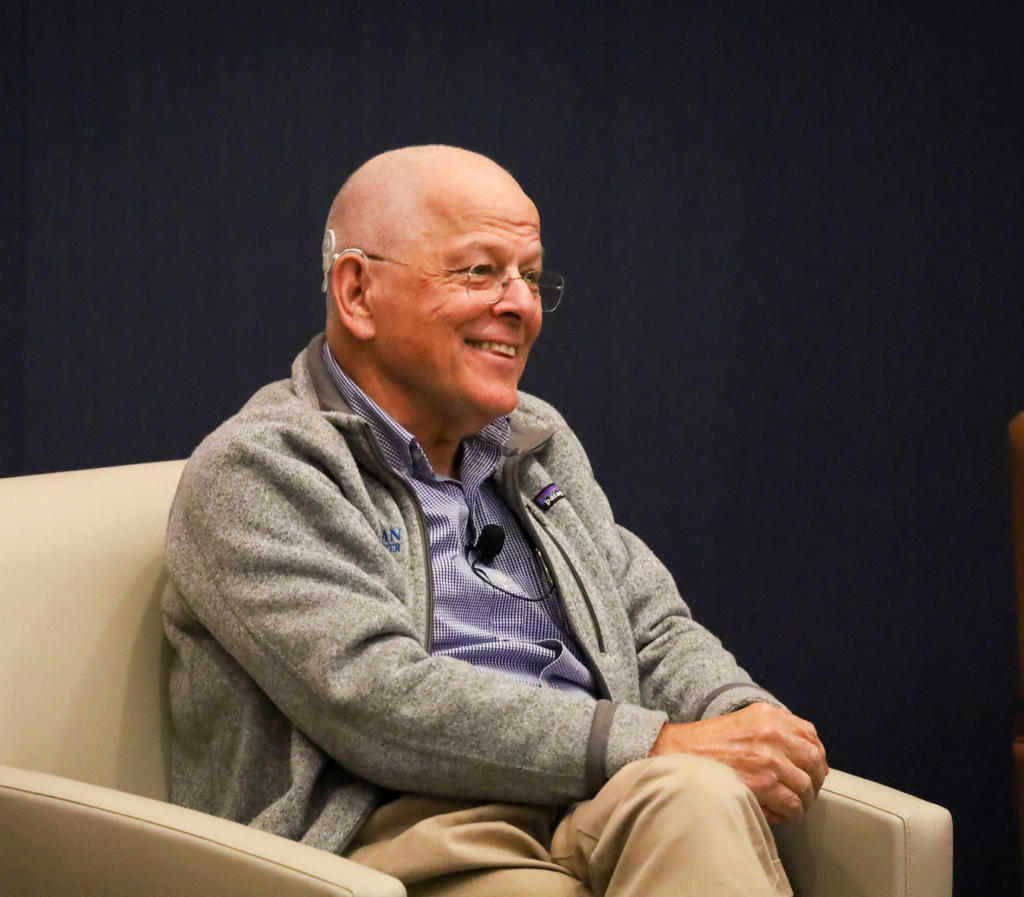
To Dr. Jiang and Dr. Colditz’s surprise – the company was acquired less than one year after commercialization. Dr. Colditz explained that buyout within one year was not their intention but was extremely helpful.
“Buyout was actually the fastest on-ramp to get to clinic that was available,” Dr. Colditz said. Selling this company to a larger, previously established clinical entity meant that it would reach the hands of clinicians and patients much more quickly – which, ultimately, was Dr. Colditz and Dr. Jiang’s goal.
Driving innovation in neuroscience in St. Louis
Dr. Kepecs is currently in the midst of commercialization with OTM. He explained that his idea focuses on endometriosis, which effects between 10-20% of women and can cause pain, infertility, among other problems. Sadly, there is not a simple diagnostic for the disease – yet.
While the panel didn’t discuss the specifics of Dr. Kepecs’ idea, they did talk about his perspective on inventiveness in academia.
“I think a lot of it is temperament, but I would also say it has to do with value,” he said. “If failure is a reflection or a verdict on your ability, it’s hard to take risks.”
Dr. Kepecs explained that taking risks gets easier over time, and that academia is an excellent place for inventiveness because of the creative freedom afforded to academic researchers.
He also detailed the importance of collaboration between industry and academics in order to help make risky, new ideas successful.
“They really want to have an impact, an immediate clinical impact,” Dr. Kepecs said of his industry partners. “And they’re willing to take much, much more risk than NIH.”
This event represented the start of forging many more of these connections between neuroscience research and innovation happening at WashU, and the opportunities for application provided by industry in the St. Louis area. This is the start of the ecosystem that Dr. Richards envisions, one that supports the transition from scientific discovery to clinical impact.
