Items
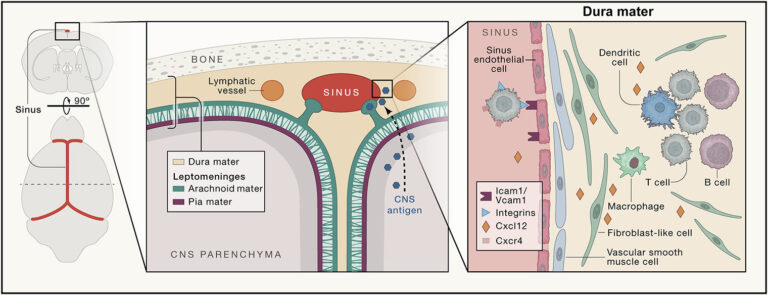
Functional characterization of the dural sinuses as a neuroimmune interface
Rustenhoven, J., Drieu, A., Mamuladze, T., de Lima, K. A., Dykstra, T., Wall, M., Papadopoulos, Z., Kanamori, M., Salvador, A. F., Baker, W., Lemieux, M., Da Mesquita, S., Cugurra, A., Fitzpatrick, J., Sviben, S., Kossina, R., Bayguinov, P., Townsend, R. R., Zhang, Q., Erdmann-Gilmore, P., Smirnov, I., Beatriz-Lopes, M., Herz, J., Kipnis, J., Feb 18 2021, In: Cell. 184, 4, p. 1000-1016.e27

Gabel Lab
Epigenetic mechanisms in the brain
The Gabel Lab studies molecular mechanisms of gene regulation that contribute to development and plasticity in the mammalian brain, and how disruption of these mechanisms can lead to neurological disease.
Goodhill Lab
Brain development
The Goodhill Lab is interested in how brains process information, particularly during development. Our current focus is on the development of neural coding in the zebrafish brain. We are addressing this using a combination of behavioral analysis, calcium imaging of neural activity, and mathematical/computational modeling.
Han Lab
Learning & memory in the hippocampus
PI: Edward Han, PhD
The Han lab studies learning and memory processes in the hippocampus. The lab investigates the cellular and neuronal circuit activity supporting spatial navigation learning in mice. Major approaches in the lab include in vivo two- photon calcium imaging during virtual reality behavioral tasks, in vivo electrophysiology, optogenetics, and computational modeling.
Holy Lab
Olfactory circuits, technology & computation
The Holy Lab combines a focus on understanding circuits and behavior with a willingness to pioneer new technologies to address the major challenges in the field. The lab's major scientific focus is on the olfactory system of mice. We choose this system because it presents a tractable “playground” for so many of the questions of modern neuroscience.
IDDRC seminar series
The Department of Neuroscience and the Intellectual and Developmental Disabilities Research Center (IDDRC) host the monthly IDDRC seminar series that focuses on research on developmental disorders.

Kepecs Lab
Reverse engineering cognition: Neurons to psychiatry
PI: Adam Kepecs, PhD
The long-term goal of the Kepecs Lab is to reverse engineer the computational and neurobiological processes underlying cognition and decision-making and apply these insights to biological psychiatry.

Li Lab
Neuroimmunology & microglial biology
The Li Lab is broadly interested in neuroimmunology with a focus on microglial biology. Particularly, the lab is interested in combining cutting-edge single-cell genomic technologies with in vitro and in vivo genetic, molecular and cellular tools to investigate microglial development, heterogeneity and mechanisms of neuro-immune interactions underlying brain structure and disease.