Kerry Grens will manage content for the department’s freshly renovated website, as well as its social media channels and other platforms.
New media manager joins Department of Neuroscience

Kerry Grens will manage content for the department’s freshly renovated website, as well as its social media channels and other platforms.

Most recently, Mosley was the research manager for the Division of Infectious Diseases in the Department of Medicine.
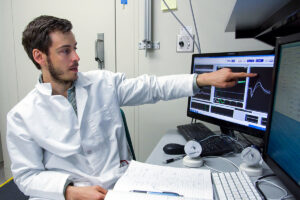
Provides insight into how people decide whether they want to know what future holds
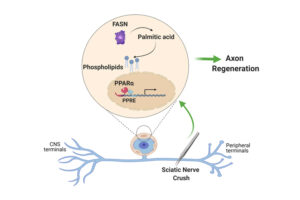
In a new paper, Valeria Cavalli’s lab describes the key role of a relatively poorly studied type of glial cells, satellite glial cells (SGC), in nerve repair.

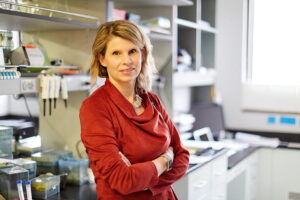
Dr. Cavalli’s team will combine single-cell approaches and epigenomic approaches in mouse and human sensory neurons to understand the neuronal and non-neuronal mechanisms orchestrating nerve repair.
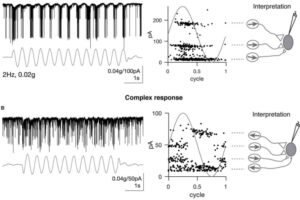
The Bagnall lab finds the complexity of tuning in a vestibular neuron arises from the diversity of inputs it receives, and that this complexity can be predicted from these inputs.

A study from Adam Kepecs’s lab in mice and people offers a new approach to investigating mental illnesses.