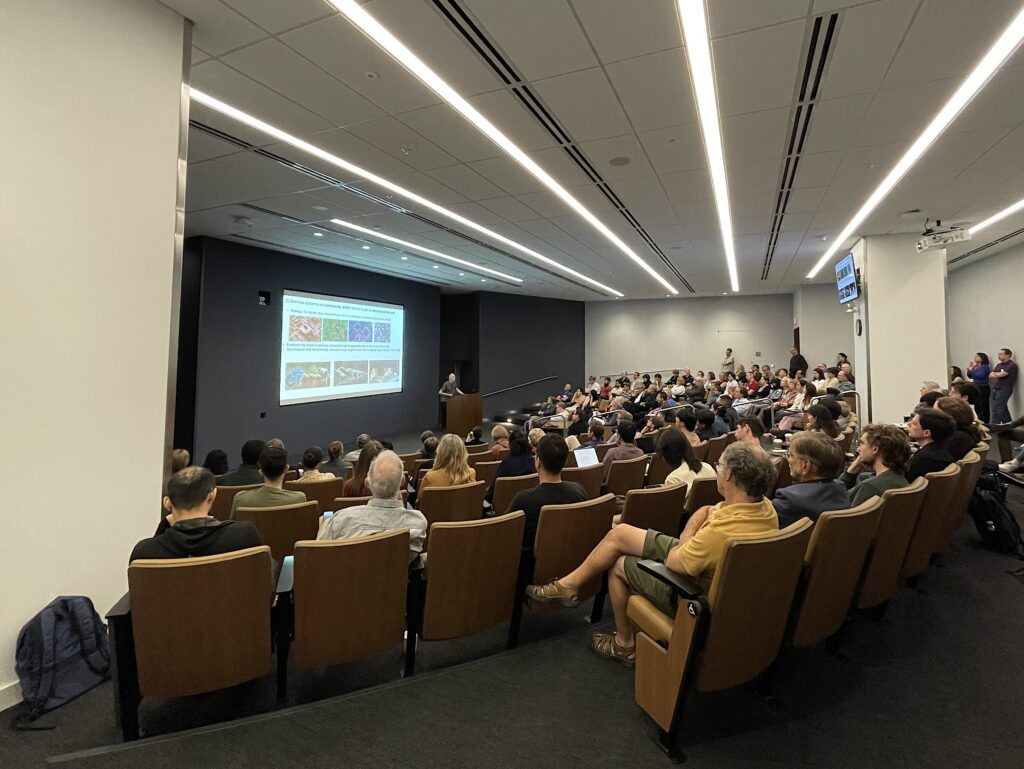
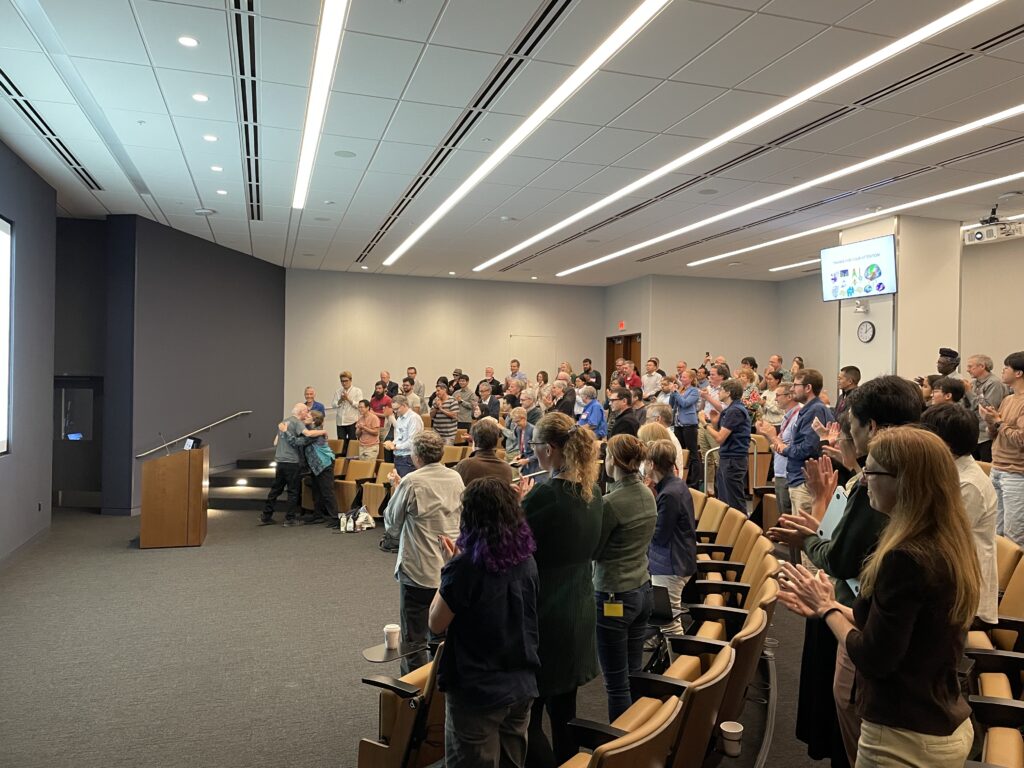
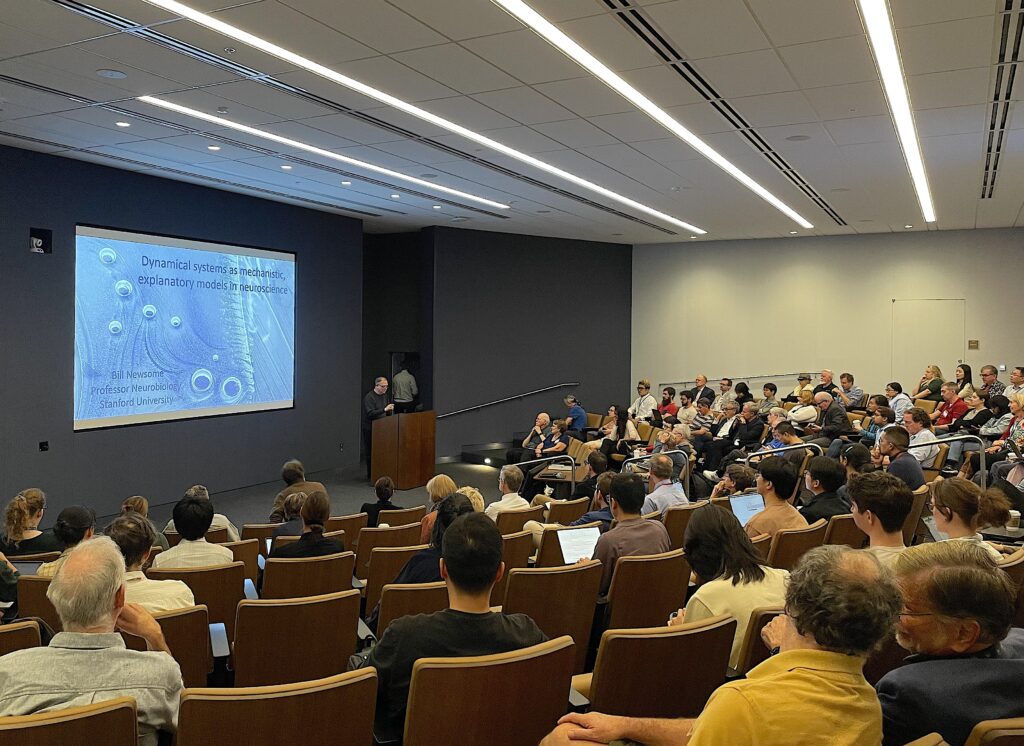
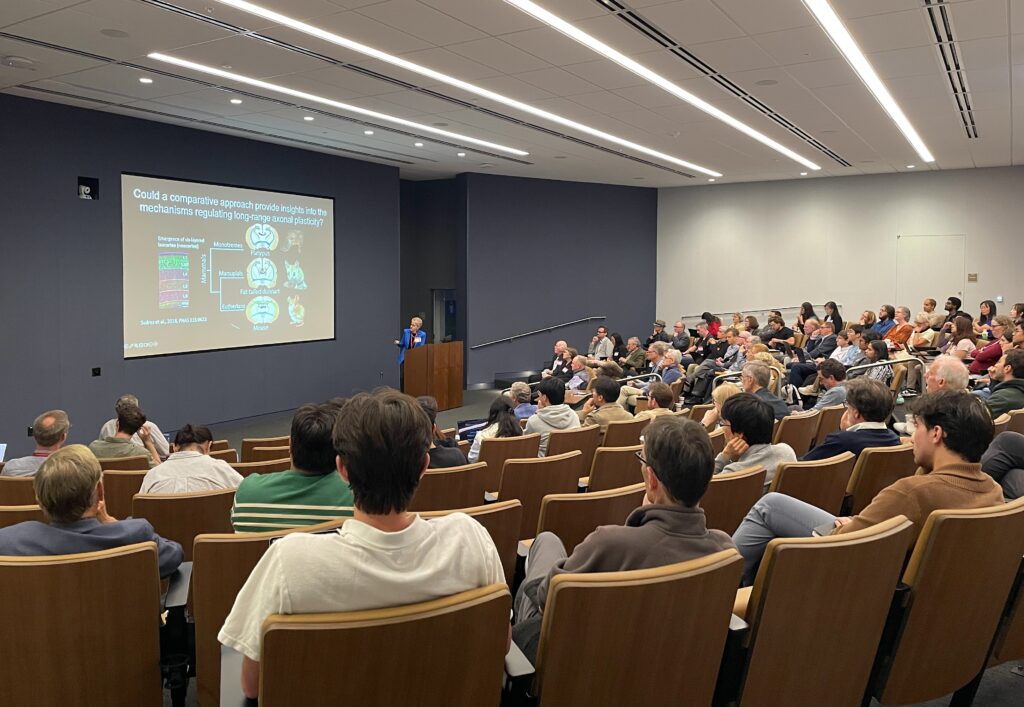
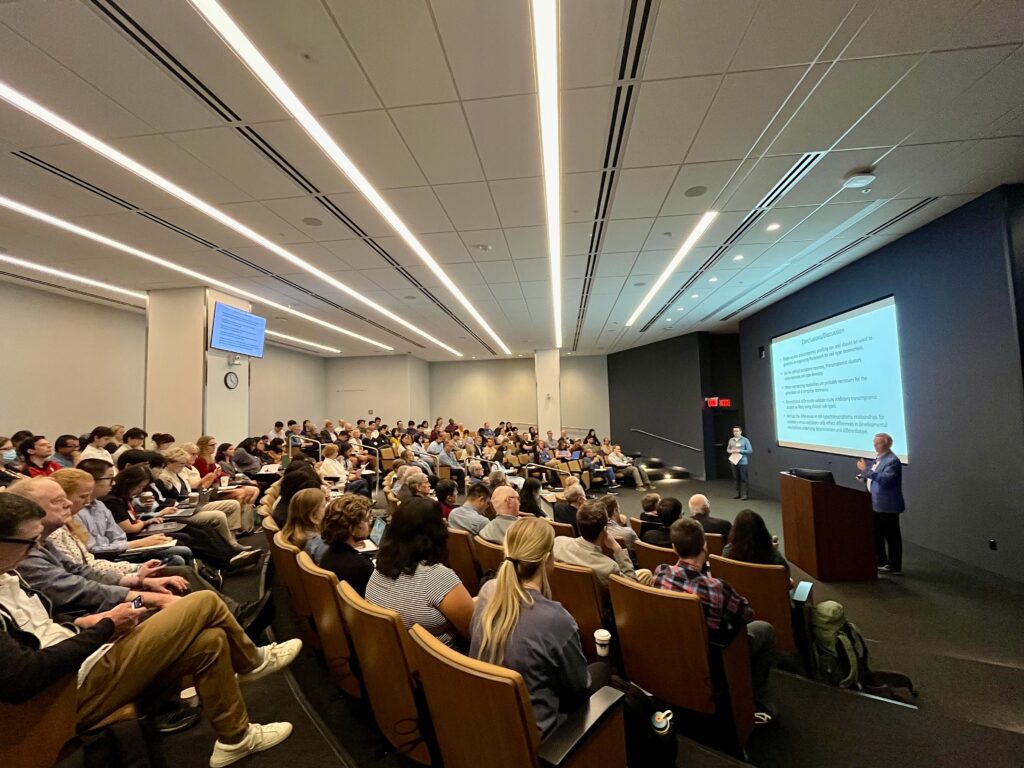
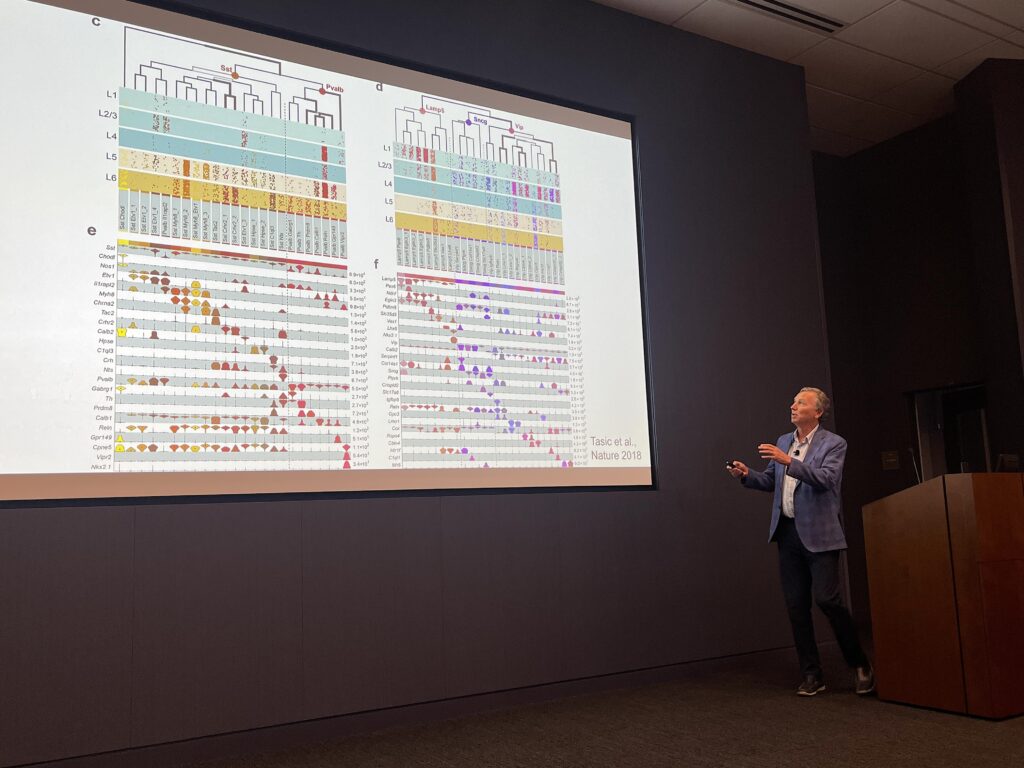
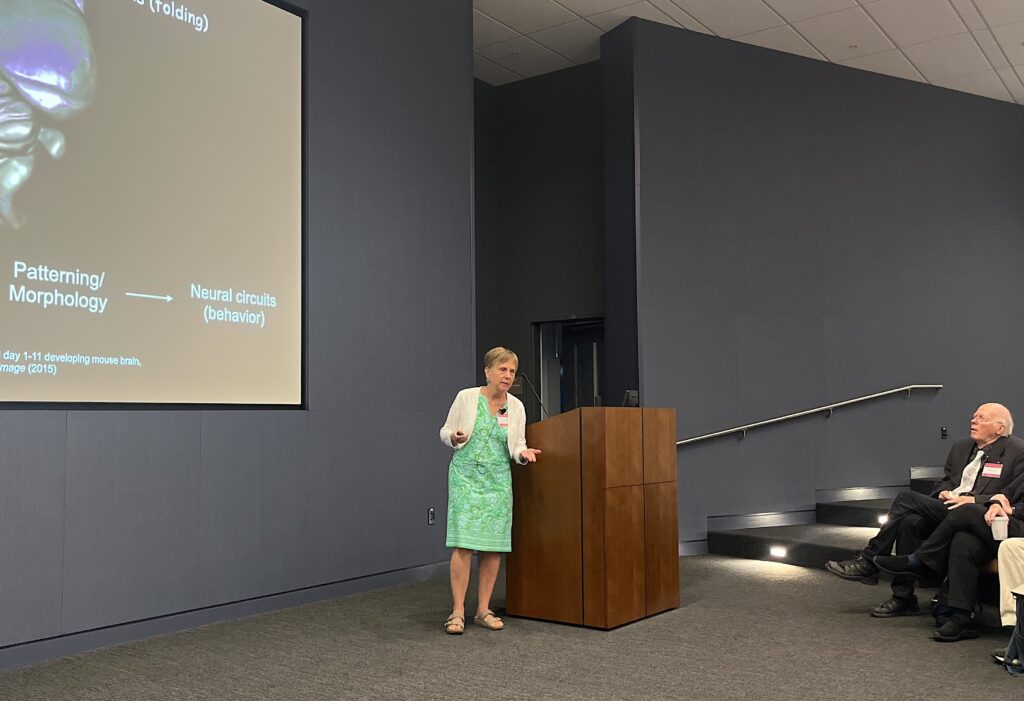
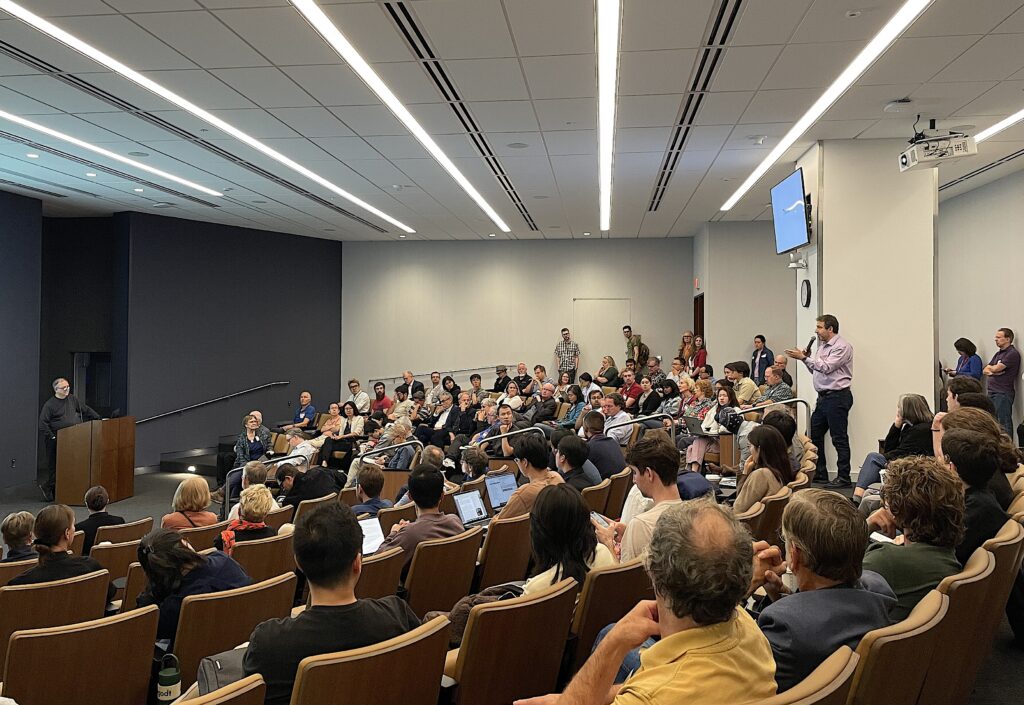
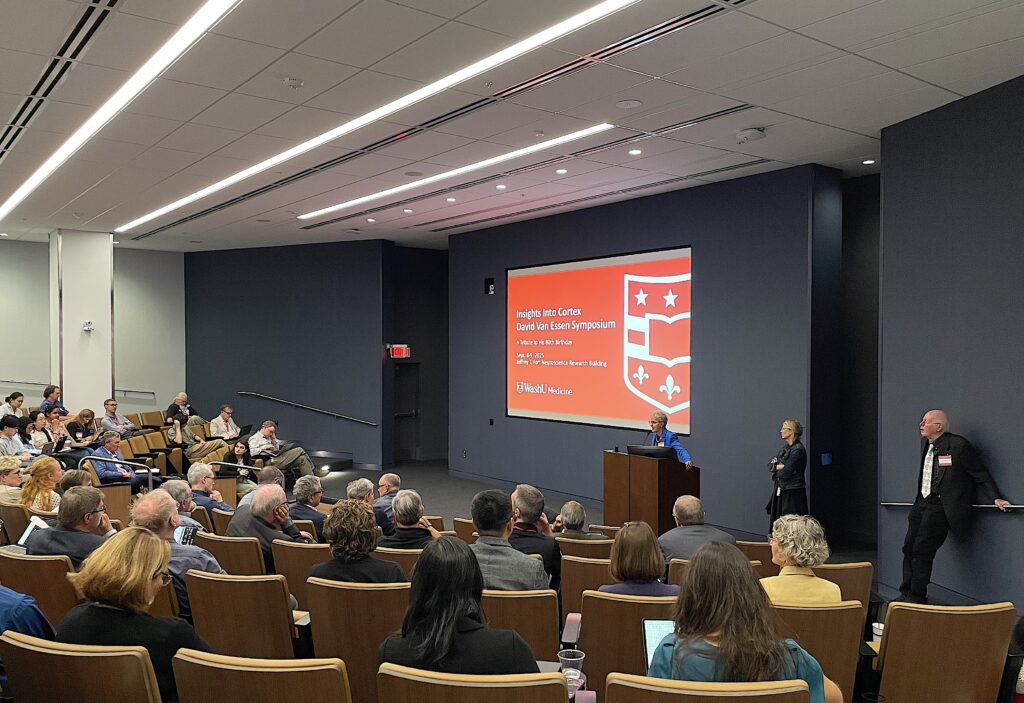
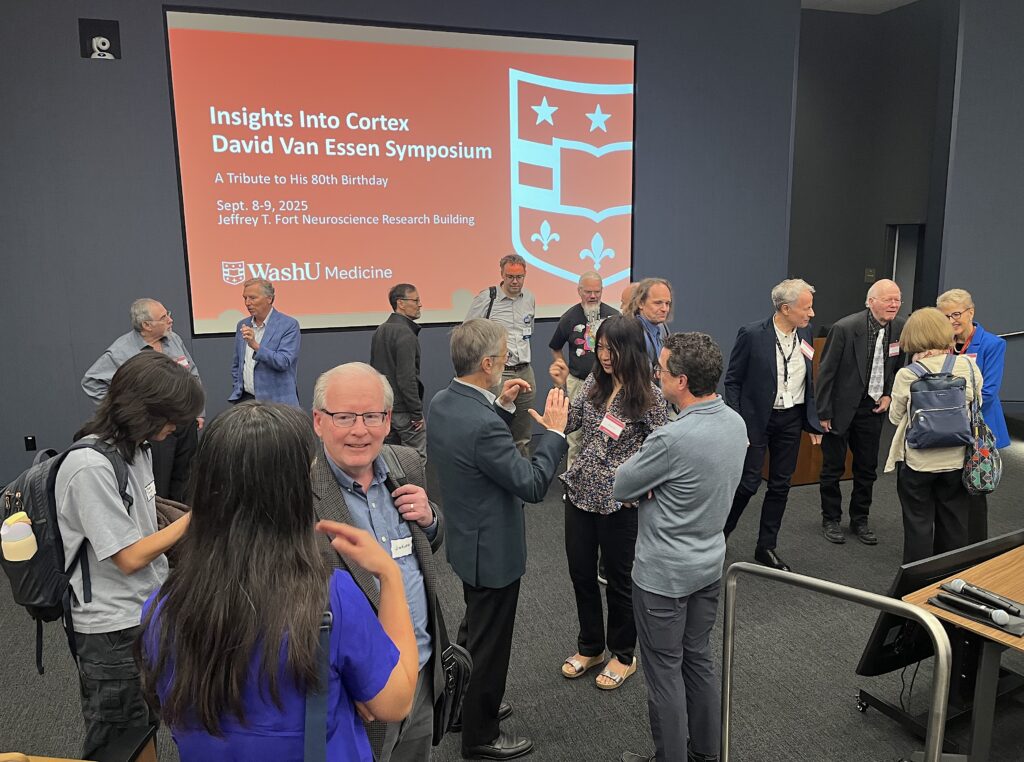
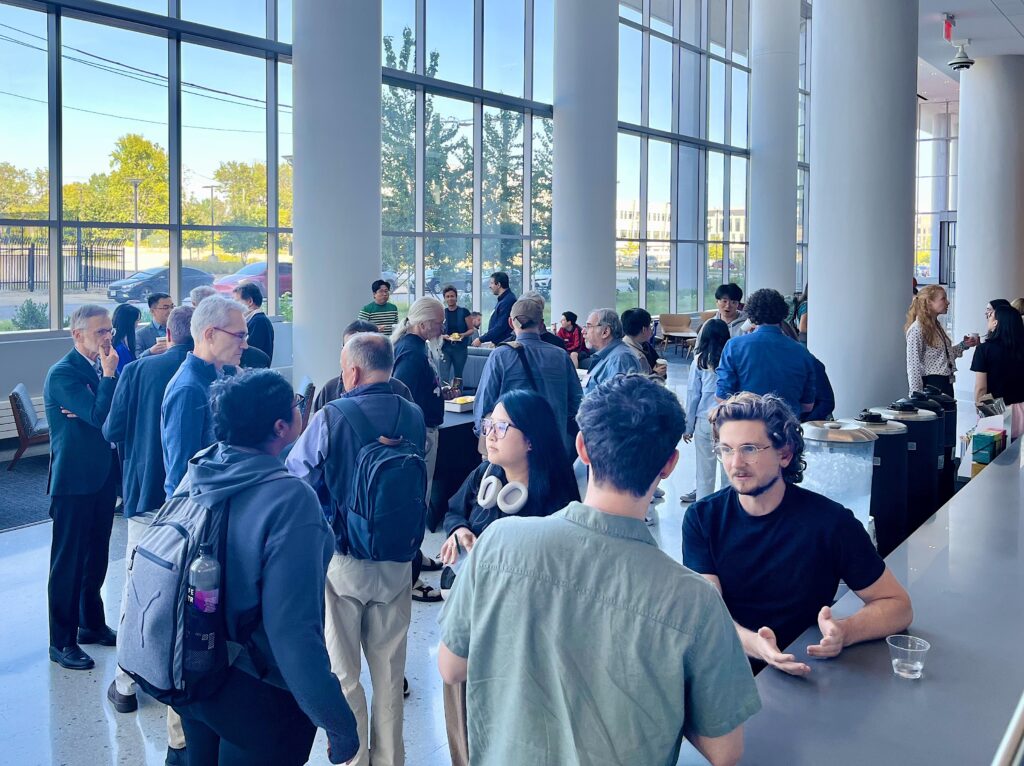
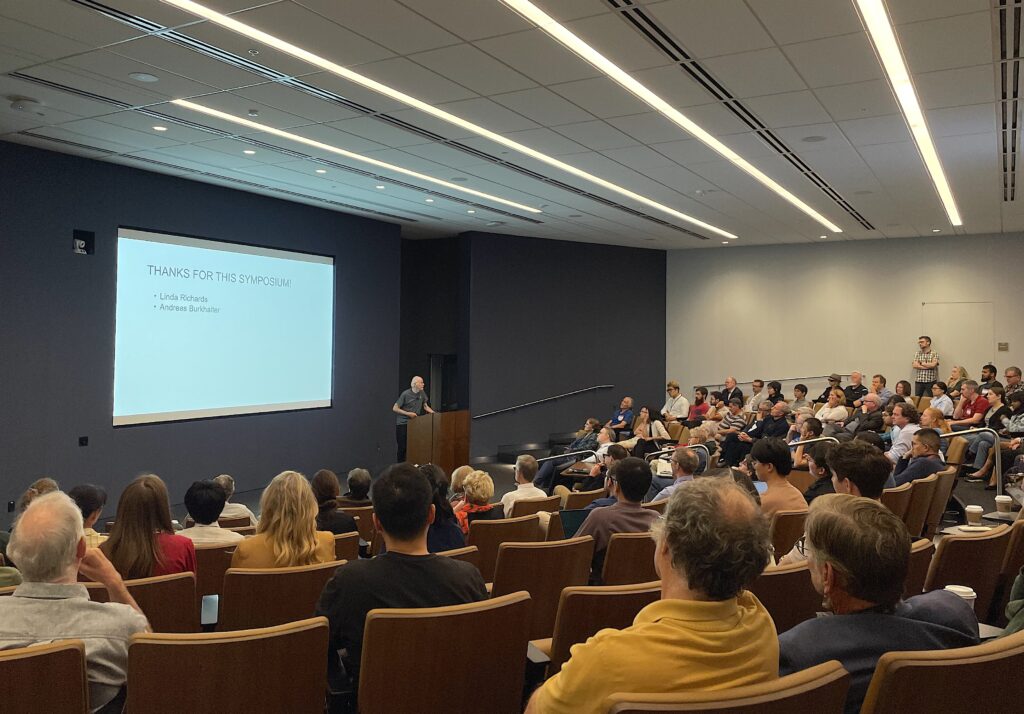
David Van Essen, PhD, who has been a member of the Department of Neuroscience since 1992 (serving as chair from 1992 to 2012), was celebrated for his contributions to neuroscience during the David Van Essen Symposium: Insights Into Cortex on Sept. 8-9, 2025, in the Jeffery T. Fort Neuroscience Research Building (NRB) Auditorium and NRB McDonnell Lobby.
The 80th birthday celebration for Van Essen included talks from neuroscience leaders around the world and more than 200 attendees.
Van Essen is the Alumni Endowed Professor of Neuroscience at WashU.
Van Essen’s legacy
Van Essen has carried out pioneering studies that shape our understanding of cortical structure, function, connectivity, development and evolution. His manual method for making cortical flatmaps enabled key advances in characterizing cortical organization decades before computerized cartography was feasible. Using information about Function, Architecture, Connectivity and Topography, he articulated and applied the multimodal “FACT” approach to cortical parcellation in the macaque. He introduced the concept of distributed hierarchical organization based on anatomical connectivity patterns, including a seminal 1991 study in Cerebral Cortex with approximately 10,000 citations. His neurophysiological studies provide deep insights into functional specialization, concurrent processing streams and dynamic routing of information in visual cortex.
Starting in 2010, Van Essen co-led the Human Connectome Project (HCP), which acquired, analyzed and shared neuroimaging data of exceptional quality from 1,200 healthy adults that has been used in more than 3,000 studies. His lab spearheaded a FACT-based, multimodal parcellation of the human cerebral cortex that is the most comprehensive and definitive parcellation in any mammalian species. The software developed in his lab provides best-in-class capabilities for visualizing, analyzing and sharing multimodal anatomical and functional data, including modern transcriptomic results. His Composite Tension Plus model explains better than any other model how the cortex gets its folds, regulates its thickness and achieves compact wiring. Altogether, Van Essen is the preeminent cortical cartographer of the modern neuroscience era.
Van Essen has served in many leadership positions, including 20 years as chair of the Department of Neuroscience at WashU Medicine (then called the Department of Anatomy and Neurobiology), as president of the Society of Neuroscience and as a founding chair of the Organization for Human Brain Mapping. He has received many awards and honors, including the Krieg Cortical Discoverer Award from the Cajal Club, the Glass Brain Award from the Organization for Human Brain Mapping, the George A. Miller Award from the Cognitive Neuroscience Society, and the Carl and Gerty Cori Faculty Achievement Award from WashU Medicine. He is a fellow of the American Association for the Advancement of Science and a member of the National Academy of Sciences.