The $2-million grant will go to identifying the circuits and computations responsible for integrating novelty- and reward-seeking in behaviors.
Ilya Monosov receives R01 to study neural mechanisms of novelty seeking

The $2-million grant will go to identifying the circuits and computations responsible for integrating novelty- and reward-seeking in behaviors.
The collaborative effort to study OCD is funded by a $15.6 million award from the National Institute of Mental Health.
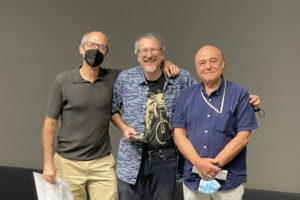
The WashU neuroscience community honors Dr. Snyder for his outstanding education efforts over the years as an instructor, course director and PhD program director.

Olendorff managed equipment, facilities, renovations, and day-to-day operations, working “minor miracles” to keep the Department running smoothly.

The project aims to answer a fundamental question in neuroscience: how do olfactory cues direct behavior?
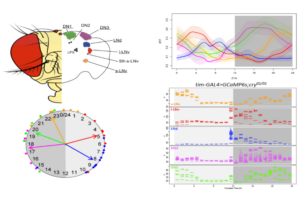
The slow and fast rhythms reflect distinct cellular processes yet nevertheless have a co-phasic relationship.

Evans led the Department of Neuroscience business office since 2010. Mellie Euler, special project administrator, is also retiring after 20 years in the department.
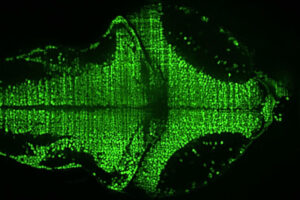
In collaboration with labs from Caltech and the University of Southern California, his team will track each cell in the zebrafish brain to document the biological basis of sleep.
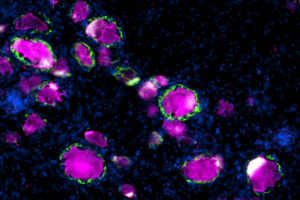
SGCs have been the subject of intense scrutiny for their involvement in inflammation, pain and nerve injury. The results confirm that rodents are a reliable model for translational research on these cells.

Zhao, an assistant professor in the Department of Neuroscience, will apply imaging mass cytometry technology to analyze tissue samples from Alzheimer’s patients.