Paul Shaw’s lab demonstrates that sleep induction in fruit flies otherwise unable to perform learning and memory tasks rescues their behavioral performance.
Enhanced sleep improves learning and memory in flies with learning deficits

Paul Shaw’s lab demonstrates that sleep induction in fruit flies otherwise unable to perform learning and memory tasks rescues their behavioral performance.

Monosov lab demonstrates that neurons in the zona incerta are responsible for the motivation to seek novelty.
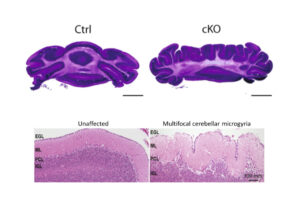
The researchers find that loss of the CHD7 protein in mice lead to changes in gene regulation and abnormal brain folds, indicating possible mechanisms for the rare neurodevelopmental disorder.
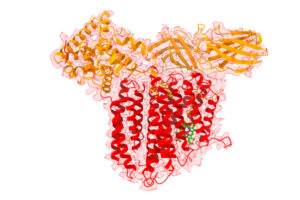
Researchers including James Fitzpatrick and Michael Rau of WUCCI and the Department of Neuroscience describe the structure and function of a heme transport and assembly machine called CcsBA.
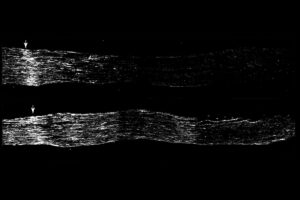
Research from Valeria Cavalli’s lab shows that targeting support cells with a cholesterol drug could improve recovery after spinal cord injury.
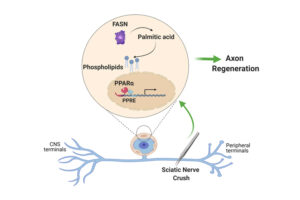
In a new paper, Valeria Cavalli’s lab describes the key role of a relatively poorly studied type of glial cells, satellite glial cells (SGC), in nerve repair.
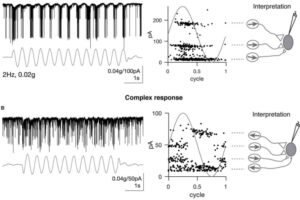
The Bagnall lab finds the complexity of tuning in a vestibular neuron arises from the diversity of inputs it receives, and that this complexity can be predicted from these inputs.

A study from Adam Kepecs’s lab in mice and people offers a new approach to investigating mental illnesses.

In a new study, the Gabel lab explores the role of MeCP2 in regulating enhancers.
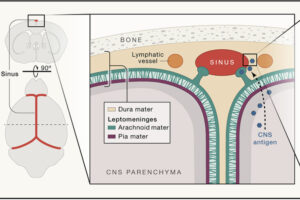
The Kipnis group describes a mechanism by which patrolling immune cells from the peripheral immune system survey cues about the immune status of the brain that accumulate in the cerebrospinal fluid surrounding the brain.