Huang studies memory processing and retrieval in Drosophila and has developed cutting-edge optical tools for observing neural plasticity in behaving flies.
Cheng Huang joins Department of Neuroscience as Assistant Professor
Huang studies memory processing and retrieval in Drosophila and has developed cutting-edge optical tools for observing neural plasticity in behaving flies.
Professor Kepecs presented at the Joint Meeting of the Austrian Neuroscience Association and the Hungarian Neuroscience Society on his approaches to developing methods to accurately model human psychiatric disorders.
Matthew Glasser, a former graduate student of Van Essen and currently an Instructor in Radiology, also made the 2022 list.
Dr. Gabel receives tenure for his pathbreaking research on epigenomic regulation of brain development and neurodevelopmental disorders, along with his devotion to mentoring and teaching.
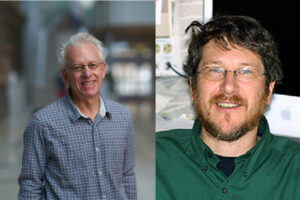
Their dedication to teaching and innovations in the classroom are recognized by one of the highest honors at Washington University School of Medicine.
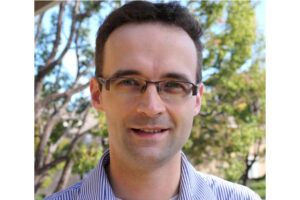
Franken studies sensory processing, including how visual scenes are perceived as collections of objects and background.
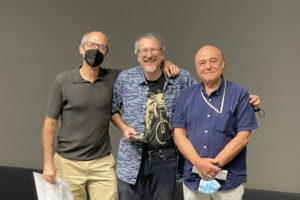
The WashU neuroscience community honors Dr. Snyder for his outstanding education efforts over the years as an instructor, course director and PhD program director.

Olendorff managed equipment, facilities, renovations, and day-to-day operations, working “minor miracles” to keep the Department running smoothly.
From circadian rhythms in Drosophila to feeding and mating in mosquito, Duvall is revealing the inner workings of insect behavior—and how to manipulate it.

Evans led the Department of Neuroscience business office since 2010. Mellie Euler, special project administrator, is also retiring after 20 years in the department.