Researchers including James Fitzpatrick and Michael Rau of WUCCI and the Department of Neuroscience describe the structure and function of a heme transport and assembly machine called CcsBA.
A pathway emerges (Links to an external site)
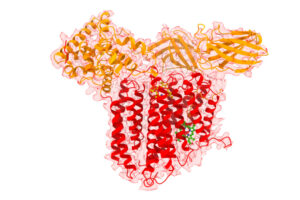
Researchers including James Fitzpatrick and Michael Rau of WUCCI and the Department of Neuroscience describe the structure and function of a heme transport and assembly machine called CcsBA.
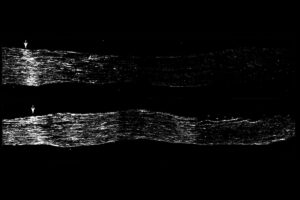
Research from Valeria Cavalli’s lab shows that targeting support cells with a cholesterol drug could improve recovery after spinal cord injury.

Wang’s research as a postdoc in Andreas Burkhalter’s lab revealed the mouse visual cortex as much more structurally complex than scientists previously thought.

Along with co-PI Hong Chen, associate professor of biomedical engineering, and collaborators including neuroscience professor Larry Snyder, Monosov will adapt an approach to controlling brain activity, called optogenetics, with the ultimate goal of repairing neural dysfunction.

The BRAIN Initiative funding will improve the ability of light field microscopy to record the activity of all neurons across the entire larval zebrafish brain as the animal swims freely.

The funding will support research on the function of a subset of microglia, immune cells that reside in the brain.

Yi studies UBE3A, the protein that is lacking in individuals with Angelman syndrome.

The NIH funding was awarded to Guoyan Zhao, Thomas Papouin, Yao Chen and Jason Yi.
Provides insight into how people decide whether they want to know what future holds
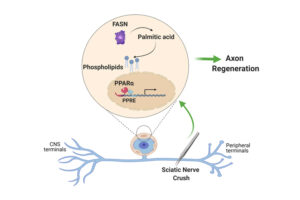
In a new paper, Valeria Cavalli’s lab describes the key role of a relatively poorly studied type of glial cells, satellite glial cells (SGC), in nerve repair.