The $500,000 award will go toward studying cellular influences on neuromodulator function.
Yao Chen, PhD, receives grant from Mathers Foundation

The $500,000 award will go toward studying cellular influences on neuromodulator function.

Sengupta, a postdoc in Martha Bagnall’s lab, earned third place for illuminating the connectivity of spinal interneurons in zebrafish.
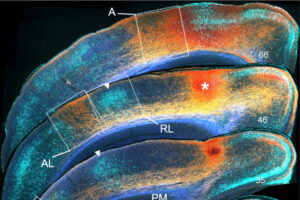
The Burkhalter lab finds that areas are embedded within a hierarchical network in which image fragments from the retina are sent through bottom-up pathways to extract percepts, and top-down pathways from higher to lower areas provide prior knowledge for interpreting the visual scene.

Paul Shaw’s lab demonstrates that sleep induction in fruit flies otherwise unable to perform learning and memory tasks rescues their behavioral performance.
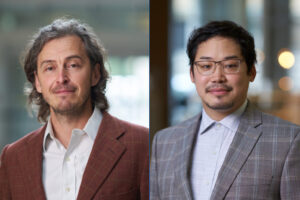
Monosov lab demonstrates that neurons in the zona incerta are responsible for the motivation to seek novelty.
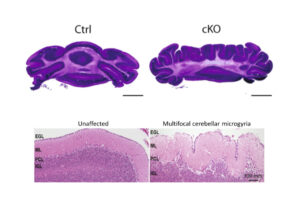
The researchers find that loss of the CHD7 protein in mice lead to changes in gene regulation and abnormal brain folds, indicating possible mechanisms for the rare neurodevelopmental disorder.
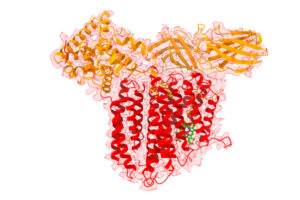
Researchers including James Fitzpatrick and Michael Rau of WUCCI and the Department of Neuroscience describe the structure and function of a heme transport and assembly machine called CcsBA.
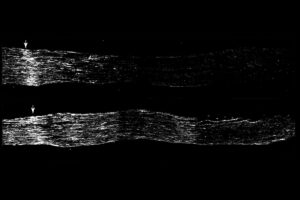
Research from Valeria Cavalli’s lab shows that targeting support cells with a cholesterol drug could improve recovery after spinal cord injury.

Wang’s research as a postdoc in Andreas Burkhalter’s lab revealed the mouse visual cortex as much more structurally complex than scientists previously thought.

Along with co-PI Hong Chen, associate professor of biomedical engineering, and collaborators including neuroscience professor Larry Snyder, Monosov will adapt an approach to controlling brain activity, called optogenetics, with the ultimate goal of repairing neural dysfunction.