Joonas Autio, PhD, brings his expertise in magnetic resonance imaging to WashU Medicine.
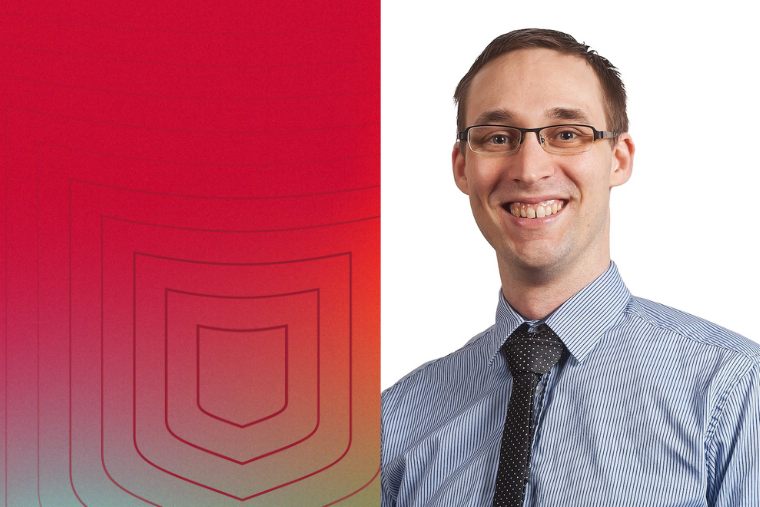
With over 15 years of experience in comparative magnetic resonance imaging in humans, non-human primates and rodents, Joonas Autio, PhD, aims to help fellow researchers harness the power of imaging for their experiments.
“My primary research goal is to develop a modern translational neuroimaging platform that bridges basic neuroscience and human health,” said Autio, who joined WashU Medicine in April as an assistant professor of neuroscience and radiology. “My work focuses on advancing MRI-based methods for mapping cortical architecture and function with high spatial precision, enabling direct comparisons between species and linking mesoscopic neural organization to macroscopic brain function.”
Joonas comes to WashU Medicine after nearly 10 years of working at RIKEN, most recently as a senior research scientist in the Center for Biosystems Dynamics Research. The institute is Japan’s largest and most comprehensive organization for basic and applied science research, and a world leader in numerous scientific fields.
At RIKEN, Autio led efforts to develop next-generation cortical layer structural and functional MRI methods in non-human primates. He co-developed two 24-channel Rogue Coils optimized for both awake and anesthetized macaque MRI, enabling versatile and high-quality data acquisition across behavioral and physiological states. He has also adapted the Human Connectome Project (HCP) methodology to achieve high-resolution, multimodal cortical mapping across species. The HCP was an unprecedented 5-year, $30 million effort funded through the National Institutes of Health to tackle one of the great scientific challenges of the 21st century: mapping the human brain, aiming to connect its structure to function and behavior.
“My current work employs these coils on a 3T Siemens MRI system to perform mesoscopic cortical layer imaging, allowing precise delineation of structural and functional features at the sub-millimeter scale,” he said.
Beyond his technical contributions, Autio plays a central role in several large international collaborations that integrate neuroimaging, neuroanatomy and cellular-level mapping. He contributes to the U.S., Japan, France and U.K. Nonhuman Primate Neuroimaging and Neuroanatomy Project (NHP-NNP) and the NIH Brain Initiative Cell Census Network (BICAN), working closely with Takuya Hayashi at RIKEN and other international partners to harmonize cross-species imaging protocols and link MRI-based measures to cellular and molecular architecture.
“These collaborative efforts aim to establish a unified framework for understanding how microstructural and vascular properties shape large-scale brain networks across species,” he said.
A background rooted in physics
Before RIKEN, Autio spent his postdoctoral work in his native Finland, where he earned his PhD in molecular medicine from the University of Eastern Finland. His master’s is in physics. Autio first became interested in physics in high school as a means to understand the fundamental phenomena that govern the world. To him, it combined philosophy with mathematics.
After his master’s and before his PhD, he worked for three years in the Department of Biophysics at the National Institute of Radiological Sciences in Japan, focusing on MRI research before returning to Finland for his doctoral studies.
Following his PhD and some postdoctoral work in Finland, Autio returned to Japan and started at RIKEN, earning awards from the Japan Human Brain Mapping Society, including a Best Young Investigator Award and Investigator Award. He was also a member of the Japan Neuroscience Society.
Since joining WashU, Autio has established his own laboratory to continue to advance comparative and translational neuroimaging. In collaboration with David Van Essen, PhD, and Matthew Glasser, MD, PhD, he is focusing on developing next-generation multimodal connectomic atlases and refining layer-specific structural and functional MRI methods for both human and non-human primate brains.
“Through these efforts, my long-term goal is to create a comprehensive translational bridge from cellular- and circuit-level mechanisms to whole-brain function, ultimately informing both basic neuroscience and clinical research,” he said.