Zhao, an assistant professor in the Department of Neuroscience, will apply imaging mass cytometry technology to analyze tissue samples from Alzheimer’s patients.
Guoyan Zhao receives grant for single-cell proteomics in the human brain
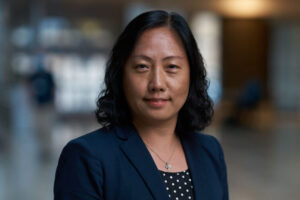
Zhao, an assistant professor in the Department of Neuroscience, will apply imaging mass cytometry technology to analyze tissue samples from Alzheimer’s patients.

Groundbreaking cancer research helps shed light on recently identified disorder, Tatton Brown Rahman Syndrome.
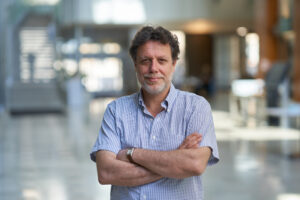
Camillo Padoa-Schioppa, PhD, has developed a manual of tools for analysis of economic choices.
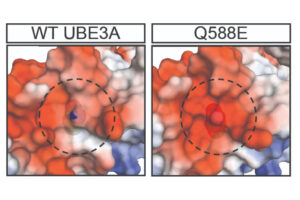
Assistant Professor Jason Yi’s group applied the technique to variants of unknown significance in UBE3A, the gene that underlies Angelman syndrome.
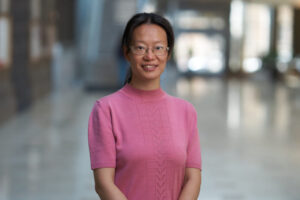
The $500,000 award will go toward studying cellular influences on neuromodulator function.
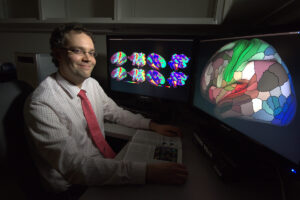
As a graduate student in the Department of Neuroscience, Glasser came to be a leader in the Human Connectome Project.
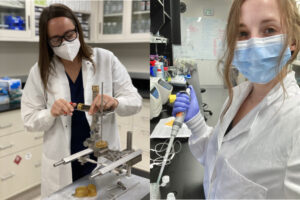
Our laboratory animal technicians are the backbone of basic research that relies on animal models.

Sengupta, a postdoc in Martha Bagnall’s lab, earned third place for illuminating the connectivity of spinal interneurons in zebrafish.
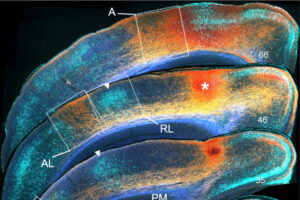
The Burkhalter lab finds that areas are embedded within a hierarchical network in which image fragments from the retina are sent through bottom-up pathways to extract percepts, and top-down pathways from higher to lower areas provide prior knowledge for interpreting the visual scene.

Prufrock studies the anatomy of the chewing system in mammals and is regarded for her excellence in teaching.