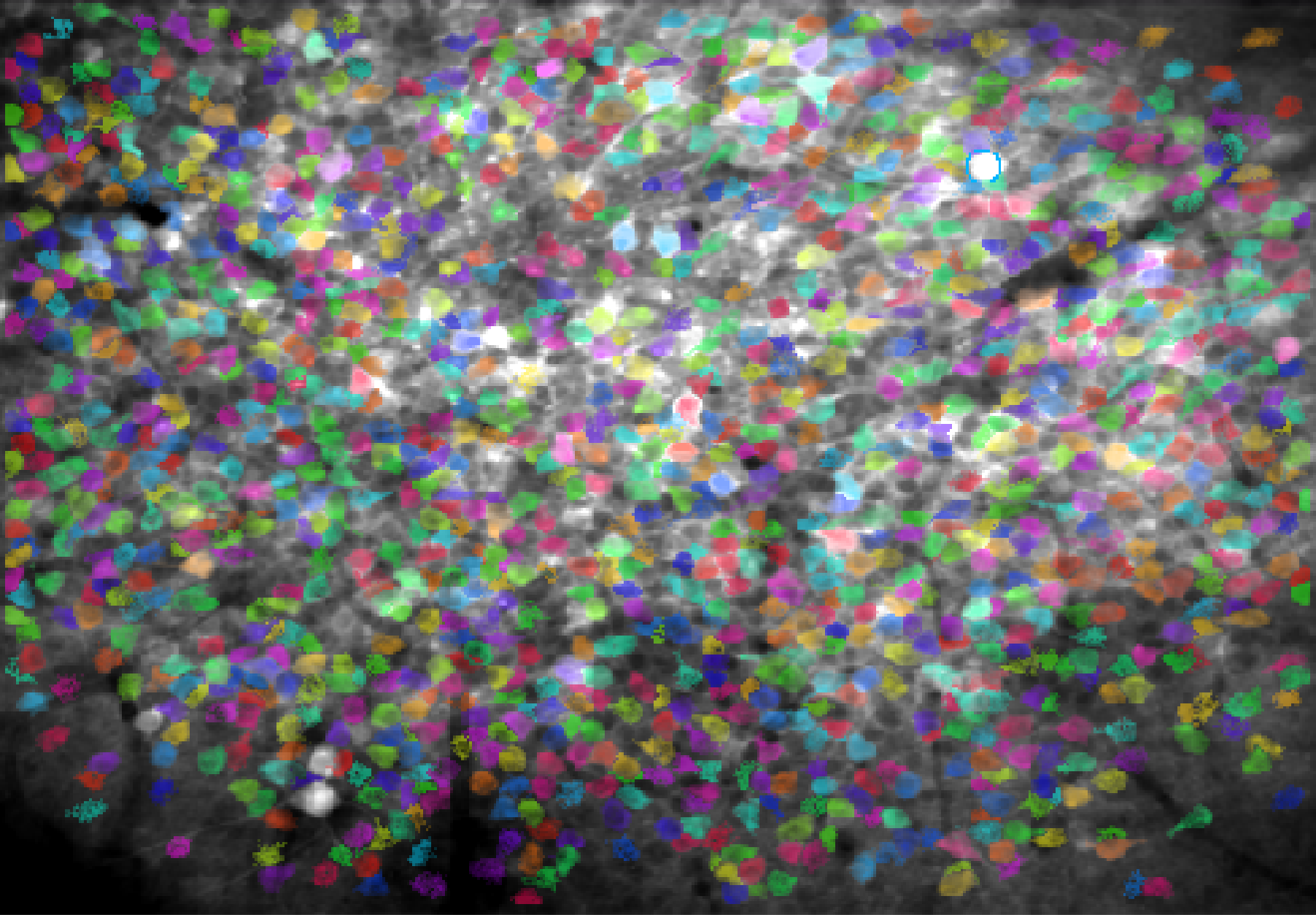
Cognitive maps help us understand where we are, and remember how to navigate the world. For example, your brain (specifically, your hippocampus) has a map of your home – where to
find the kitchen, the bathroom, the bedroom, and so on. But it’s also important for your mental map to include the locations of things you might need, like where the snacks are when you are hungry, or where your bed is when you are tired.
The mechanism for this mapping these rewarding places has remained elusive to scientists –
until a recent publication from Dr. Edward Han’s group in the WashU Medicine Department of Neuroscience. They found that reward information is encoded by a distinct class of cells,
called “reward cells”, which are distinct from neurons that encode space, or “place cells”.
“This research really gets into the kind of memory for events that are important to you,” Dr. Han said. “There’s a whole little circuit in your hippocampus that specializes in this, and it’s different from the circuit that says ‘I’m in X, Y, or Z place’ – instead, it says ‘I’m in X, Y, or Z place and something really important happened here.’”
This type of memory for recalling recent events is lost in Alzheimer’s Disease, which damages
the hippocampus, making research like this critical for treating memory loss in
neurodegenerative diseases.
“Once you know there’s this specialized machinery for these types of memories, maybe you can control it, then maybe you can enhance it,” Dr. Han said.
Indeed, the first author on the study, MD-PhD student Zahra Dhanerawala, searched through
several mechanisms before identifying a class of neurons that controls learning in reward cells. These neurons, called vasoactive intestinal peptide (VIP)-expressing neurons, play a major role in regulating map flexibility. Decreasing VIP+ neuron activity led animals to search for rewards in the wrong places, even immediately after receiving a reward. At the same time, their spatial map was unaffected: they understood exactly where they were, just not where to find rewards.
Most importantly, they found they could make normal memories even stronger. When they
increased the activity of these neurons beyond typical levels, memory for rewarded places
improved.
“The most exciting finding for me was that VIP+ neurons control specialized memory cells in the hippocampus to boost memory, while leaving the mouse’s understanding of space – their spatial map – intact,” Dhanerawala said.
This study represents a critical step in understanding how important events are encoded and
recalled in the brain. The next steps for the lab, Dr. Han said, is to try to understand exactly how these neurons enable memories linked to the cognitive map.
“I am really excited about future directions in the lab, and in the field in general, looking at
interneuron subtype circuits and their role in memory,” Dhanerawala said.