Angelman Syndrome impacts roughly 1 in 20,000 births. It is a neuro-genetic disorder that impacts patients’ movement, sleep, and cognitive function.
There is no cure for Angelman Syndrome, and often patients live as long as anyone else, but with far more difficulty due to the seizures, intellectual disability, and speech impairment (among other symptoms) caused by the disease.
Research shows that the gene UBE3A plays a role in Angelman Syndrome – this gene is expressed in many tissues throughout the human body, but in neurons, only the maternal copy is active. This happens through a process called genomic imprinting.
Losing that maternal copy UBE3A is all it takes for a child to be born with the disease. However, the mechanism of this loss making impacts across biological systems has remained elusive.
Jason Yi, Ph.D., an assistant professor in the Department of Neuroscience at WashU Medicine, published a study in Nature that reveals that a protein previously thought of as a mundane metabolic enzyme – one that maintains general cellular function, and nothing more – is likely to play an important role in how this disease impacts the brain.
This protein is an enzyme called asparagine synthetase, or ASNS.
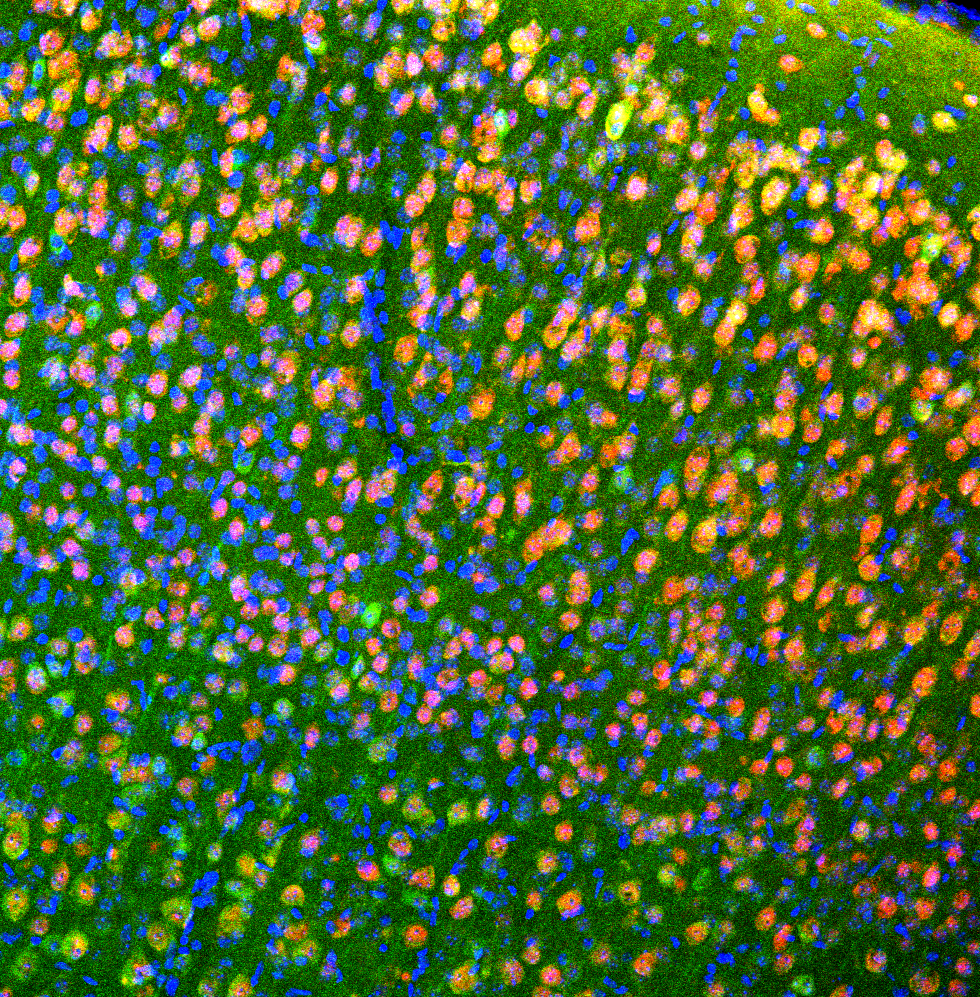
“No one had actually looked at where ASNS was expressed in the brain,” Yi said. “I think the assumption was that it was just a housekeeping enzyme, so it should be present in all cells. But that’s not true – we only see it expressed in the neurons in the brain, which matches the imprinting pattern of UBE3A.”
In addition to determining where ASNS was expressed, Yi’s research team looked at the association between this protein and UBE3A, its molecular downstream targets, and its potential to act as a therapeutic target for Angelman Syndrome in the future. This research was led by several members of the lab including lead author Kwang-Soo Kim, Ph.D., Alissa Cullen and Jalen A. Stelzer, and took the team eight years to complete.
Throughout the course of this study, the team found that the loss of maternal UBE3A affects a myriad of other molecules in neurons – including an increase in ASNS concentration.
“When you have excess ASNS, that seems to trigger the integrated stress response, which sort of tricks the cells into thinking they’re stressed when they are not,” Yi said. “They end up shutting off protein translation because of that, and that sort of stunts the growth of the brain.”
They also found that correcting this abundance of ASNS, or bringing the concentration back down to normal levels, counteracted many of the Angelman Syndrome symptoms in their animal model.
While this didn’t correct all the symptoms of the disease, Yi is optimistic that this new understanding of ASNS’s role will move the field closer to an effective treatment plan for Angelman Syndrome patients.
“I think about it like what we use for HIV or cancer – a cocktail of drugs, treating it with several different things seems to be what works. It’s not a silver bullet, but maybe more like a magical shotgun,” Yi said. “We live in a really amazing time right now – medicine is transforming before our eyes.”