Learn about the latest news and events going on in the department. You can also follow us on X @WashUMedNeuro and LinkedIn.
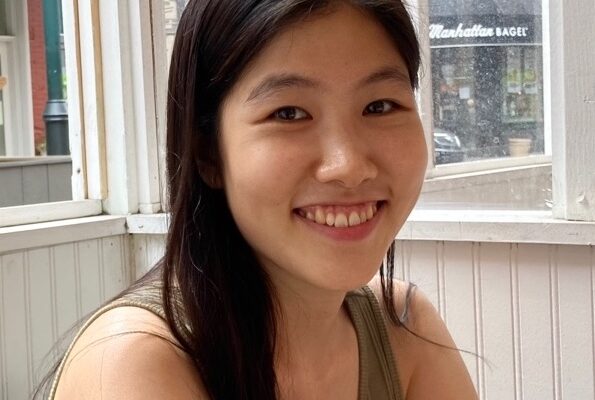
CTCN Post Doctoral Fellow Hayoung Song Appointed to Faculty at UT Austin
Hayoung Song, Ph.D., has completed her post-doctoral fellowship through the Center for Theoretical & Computational Neuroscience (CTCN) at Washington University, and accepted a faculty position at the University of Texas at Austin beginning in August 2026. This fall, as an assistant professor of psychology, her focus will be on starting her own research lab and […]

Hysell Oviedo named Perlmutter Career Development Assistant Professor (Links to an external site)
Hysell Oviedo, PhD, a neuroscientist uncovering how the brain interprets sound and language, has been installed as a Roger M. Perlmutter Career Development Assistant Professor at WashU Medicine.
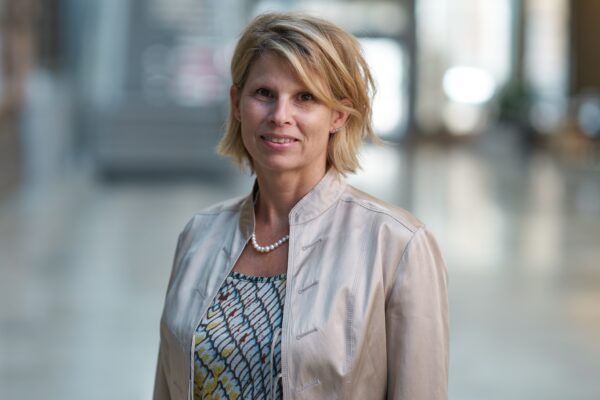
Valeria Cavalli receives Jaubert Award from the University of Geneva
Valeria Cavalli, PhD, was honored at the Geneva Chemistry & Biochemistry Days in January 2026, where she received the Jaubert Award for her contributions to understanding the molecular basis for neuronal regeneration. The Jaubert award is given every two years and recognizes the work of alumni of the University of Geneva, where Cavalli graduated from […]
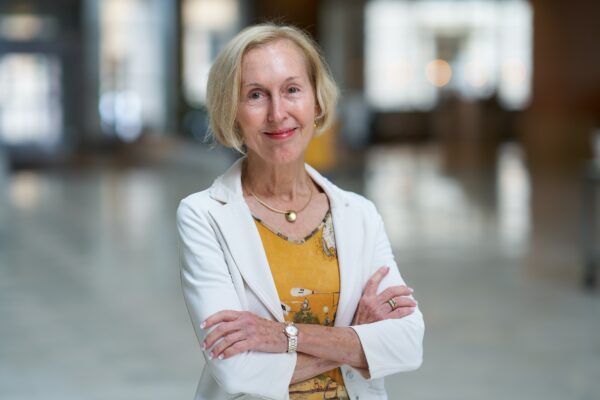
Karen O’Malley recognized as AAAS Fellow
Professor of neuroscience Karen O’Malley, PhD, has been named a 2025 Honorary Fellow of the American Association for the Advancement of Science (AAAS). This incredible honor recognizes O’Malley’s overall contributions to the scientific community and the impact of her research on science as a whole. “I was surprised and honored when I learned that I […]
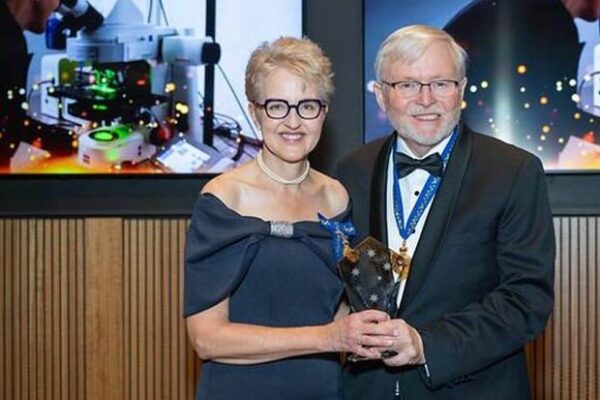
Linda Richards named 2026 Australia Day Gala Award Winner
Linda Richards, PhD, was honored at the 2026 Australia Day Gala in January for her outstanding contributions to science and higher education. The gala was held at the Embassy of Australia in Washington D.C., where Richards was recognized alongside eight other Australians living in the United States whose work drives meaningful impact across disciplines and […]
Alex Taylor recognized with outstanding didactic instructor award
Alex Taylor, Ph.D., assistant professor of anatomy in neuroscience, has been awarded the Helen Lamb Outstanding Didactic Instructor Award. Taylor received this award to recognize his excellent contributions to training nurse anesthetists at a special ceremony during the Barnes-Jewish College Goldfarb School of Nursing commencement in December 2025. Of the eight awards presented at this […]
Chen Receives 2026 Dean’s Impact Award
Dr. Yao Chen’s research focuses on how chemical signals in the brain shape behavior, learning, and sleep. Using advanced imaging techniques, her work uncovers how neuromodulators influence neural circuits and links molecular signaling to brain function and disease. She is also a dedicated mentor and educator, training the next generation of neuroscientists. Read the full […]
Anthony Pappas recognized with teaching award, decided by medical students
Anthony Pappas, Ph. D., has been awarded the Stanley Lang Teacher of the Year Award. Pappas joined the department as an education-track faculty member in June 2025 and, in a short period of only nine months, has already made a significant impact on the training of future physicians. As an assistant professor of anatomy in […]
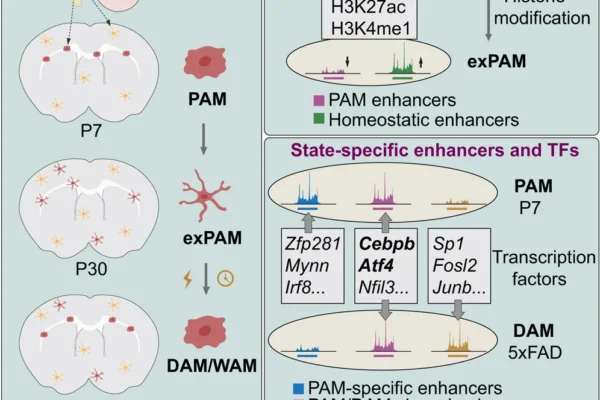
Researchers Illuminate the Epigenetic Basis of Microglial Plasticity (Links to an external site)
New paper from Harrison Gabel’s Lab in collaboration with Tristan Li’s lab (Genetics) which could have broad implications for studies on brain development, aging and neurodegeneration.
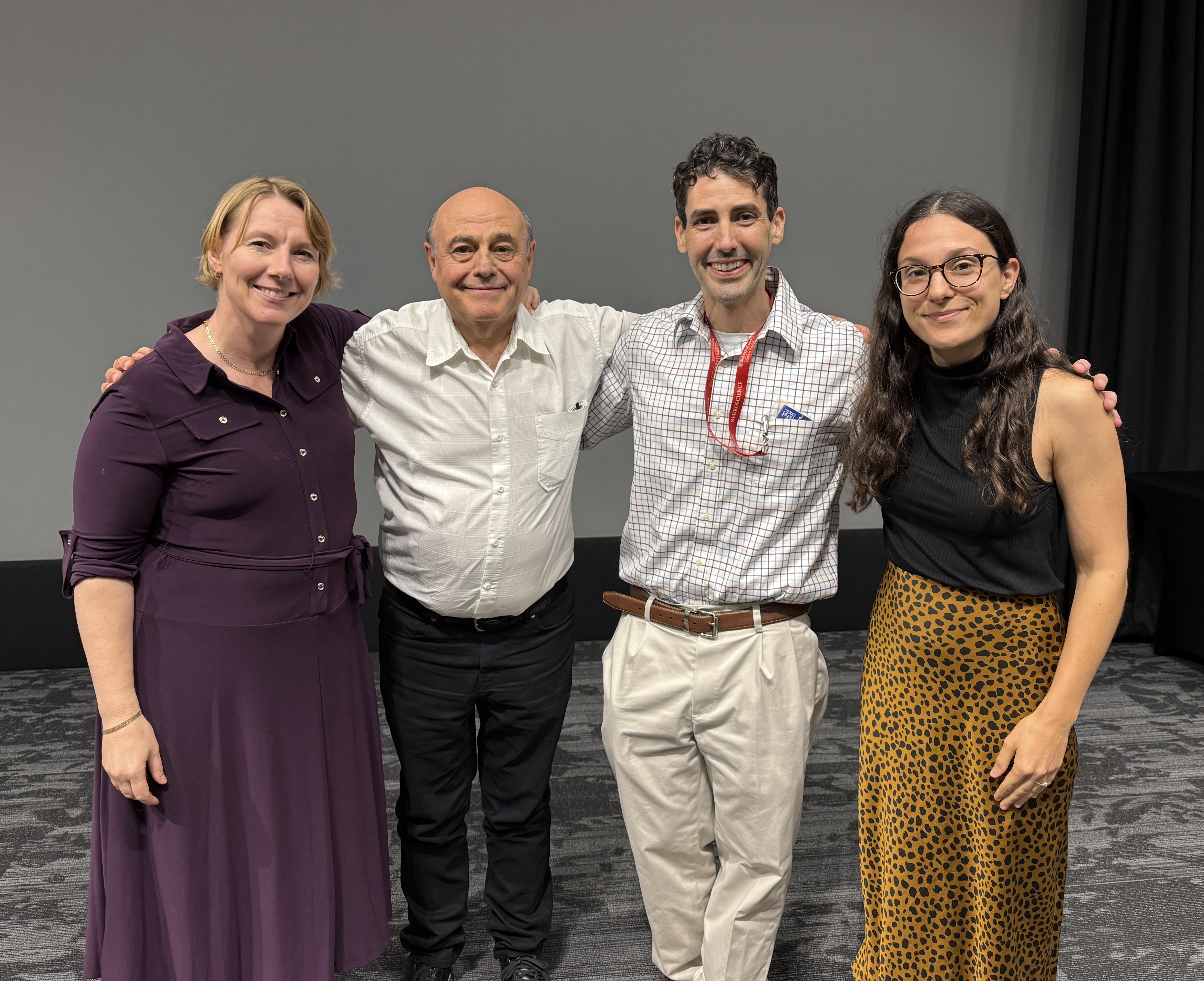
Bauernfeind, Dikranian honored by the WashU Medicine Academy of Educators
Amy Bauernfeind, PhD, was honored with the Academy of Educators’ Exemplary Educator Award, and Krikor Dikranian, MD, PhD, received a Lifetime Achievement Award from the academy.
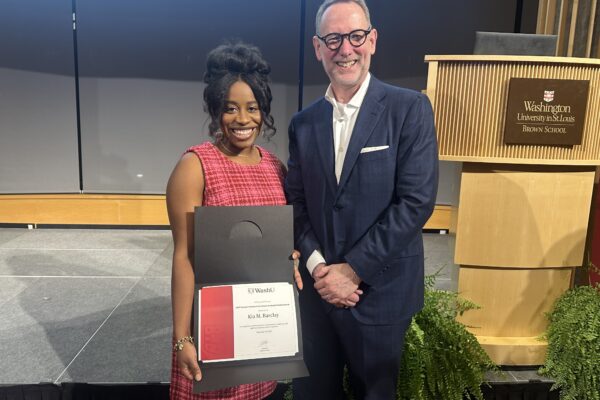
Li Lab member Kia Barclay receives Provost’s Research Excellence Award (Links to an external site)
Kia Barclay of the Li Lab has been selected as a recipient of the Provost’s Graduate Student Research Excellence Award.
Advancing comparative and translational neuroimaging methodologies
Joonas Autio, PhD, an assistant professor of neuroscience and radiology, has over 15 years of experience in comparative magnetic resonance imaging.

Prime time for fiber optics to take a deep dive into brain circuits (Links to an external site)
A group of researchers from the McKelvey School of Engineering and the Kepecs Lab has created a new kind of fiber-optic device to manipulate neural activity deep in the brain.
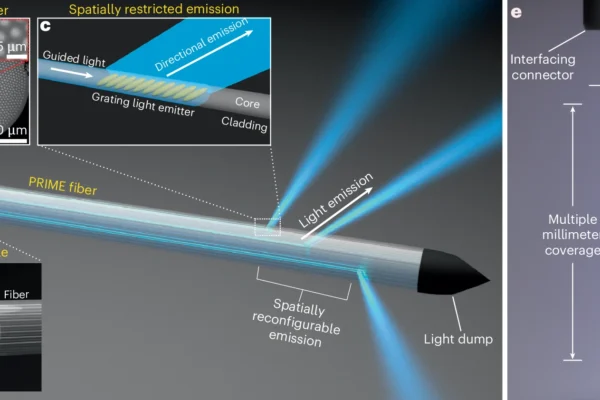
Laser-engineered PRIME fiber for panoramic reconfigurable control of neural activity (Links to an external site)
Researchers from the McKelvey School of Engineering and the Kepecs Lab have a new paper in Nature Neuroscience describing their development of a panoramically reconfigurable illuminative (PRIME) that offers a powerful platform for optical control of neural circuits across the brain.

Watch the 2025 Distinguished Lecture
Watch the 2025 Department of Neuroscience Distinguished Lecture presented by Michael Rosbash, PhD, a 2017 Nobel Prize laureate in Physiology or Medicine.

Endothelin B receptor inhibition rescues aging-dependent neuronal regenerative decline (Links to an external site)
A new paper in eLife from the Cavalli Lab reveals that inhibiting ETBR function enhances axon regeneration and rescues the age-dependent decrease in axonal regenerative capacity, providing a potential avenue for future therapies.

From epilepsy to Alzheimer’s
An early interest in epilepsy research led Joanna Jankowsky, PhD, to her focus on understanding the pathogenesis of Alzheimer’s.

Revisit the David Van Essen Symposium
Read more about the David Van Essen Symposium and see photos from the two-day event.