Learn about the latest news and events going on in the department. You can also follow us on X @WashUMedNeuro and LinkedIn.

Phillips-Cremins named BJC investigator (Links to an external site)
Jennifer Phillips-Cremins will join the Department of Neuroscience in November with a dual appointment in the Department of Genetics as the James McDonnell Professor.

From research to education
Anthony Pappas, PhD, has joined WashU Medicine as an assistant professor of anatomy in neuroscience.

Artificial transneurons emulate neuronal activity in different areas of brain cortex (Links to an external site)
Lawrence Snyder, MD, PhD, is part of a new study in Nature Communications that demonstrates that artificial neurons can function as trans-functional devices (transneurons) that reconfigure their behavior to attain instantaneous computational needs, each capable of emulating several biological neurons.

Natural history grants boost efforts in rare genetic syndromes (Links to an external site)
Harrison Gabel, PhD, collaborative partnership awarded grant through 2025 Natural History Study Small Grant Program.

Bridges joins the WashU Medicine Department of Neuroscience
Wendy Bridges is the new business director for the WashU Medicine Department of Neuroscience.

Revealing how the brain stores more memories and keeps them safe
Gaia Tavoni, PhD, and Kaining Zhang, PhD, have published a new paper that offers insights into the memory capacity of brain-inspired networks.

WashU Medicine Neuroscience researchers part of NIH grant to study role of genes in autism (Links to an external site)
Harrison Gabel, PhD, and Hysell Oviedo, PhD, are part of a team of WashU Medicine researchers who have received an $11.85 million NIH grant.

New study suggests V2b neurons have distinctive role in motor control (Links to an external site)
In a study published June 12 in The Journal of Neuroscience, WashU researchers show how they used optogenetics in the larval zebrafish to map the connectivity and activity of V2b neurons, a major inhibitory spinal population, to receive the results.

Research soaring with the Eagles
Jason Yi, PhD, received a $400,000 pilot grant from the Eagles Autism Foundation to advance a new approach to treating autism spectrum disorder.

New papers unveil insights into how the brain processes complex visual input
Tom Franken, MD, PhD, has recent papers published in iScience and Neuron that add new knowledge to how the brain processes complex visual input.

Papouin senior author of study published in Science (Links to an external site)
Thomas Papouin, PhD, assistant professor of neuroscience, is the senior author of a groundbreaking study published May 15 in Science.

David Van Essen Symposium: Insights Into Cortex
Join the WashU Medicine Department of Neuroscience on Sept. 8-9 for the David Van Essen Symposium: Insights Into the Cortex, a tribute to the 80th birthday of Van Essen.

Yi receives 2025 Dean’s Impact Award (Links to an external site)
Jason Yi, PhD, an assistant professor of neuroscience, is acknowledged for his work with the Angelman Syndrome Foundation and his hands-on, compassionate approach to the syndrome’s community.

WashU Medicine researchers identify potential for repurposing Prozac to treat rare epilepsy
Christina Gurnett, MD, PhD, and Lawrence Salkoff, PhD, are lead authors on a case report that describes how Prozac can be used in the treatment of children with rare forms of epilepsy.
Brain pathway links inflammation to loss of motivation, energy in advanced cancer (Links to an external site)
Study in mice shows motivation can be restored with targeted treatments.

Science study identifies direct connection between cancer-related inflammation and the loss of motivation characteristic of advanced cancer (Links to an external site)
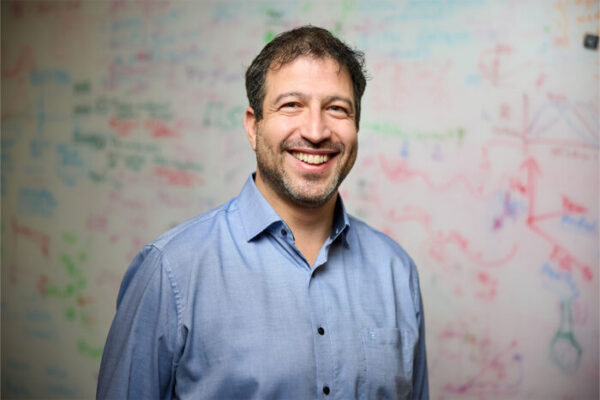
In a study published April 11 in Science, Adam Kepecs, PhD, and other WashU Medicine researchers report they discovered a previously unrecognized pathway in the brain that senses inflammation and actively suppresses dopamine — a key driver of motivation — resulting in apathy and loss of drive.

Oviedo installed as Department of Neuroscience’s latest endowed professor
Hysell Oviedo, PhD, has been installed as the Roger M. Perlmutter Career Development Assistant Professor of Biomedical Research.
Whitehall Foundation grant to help fuel Huang’s latest research
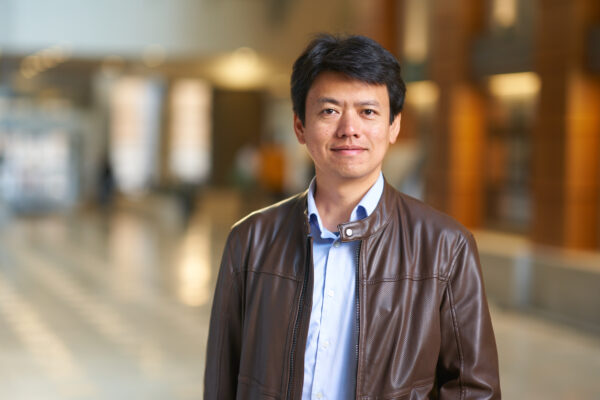
Cheng Huang, PhD, has won a Whitehall Foundation grant to study the neural mechanisms of prediction using Drosophila (fruit flies) as a powerful model to understand analogous processes in the human brain.