Taghert’s group aims to determine how circadian pacemaker cells in the brain control behavior and physiology that peak at different times.
Paul Taghert awarded $1.9 million Outstanding Investigator Award
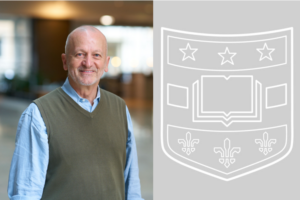
Taghert’s group aims to determine how circadian pacemaker cells in the brain control behavior and physiology that peak at different times.

Ibrahim Saliu, a postdoctoral researcher in the Department of Neuroscience, has received a $200,000 grant from the Alzheimer’s Association to study the role of astrocytes in neurodegenerative diseases such as Alzheimer’s and Parkinson’s.

The project will investigate the contributions of subsets of microglia—the brain’s immune cells—to Alzheimer’s disease.
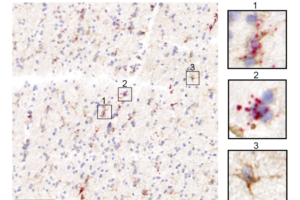
A study of human brain tissue by Guoyan Zhao and colleagues identifies genetic activity in microglia and astrocytes related neurodegeneration and neuropathology among individuals with Alzheimer or Parkinson disease.
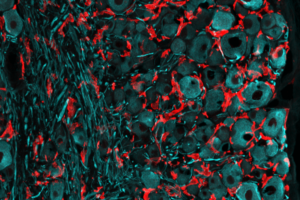
After an injury to dorsal root ganglion neurons adjacent to the spinal cord, resident macrophages work with satellite glial cells to heal damaged axons.
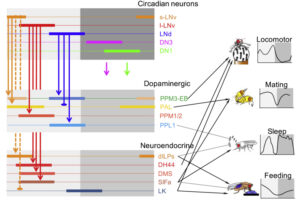
Cellular circuits downstream from circadian pacemaker neurons direct normal daily rhythms of feeding, mating and sleep.

Read Dr. Ashley Morhardt’s take on the paper in an article in Science.
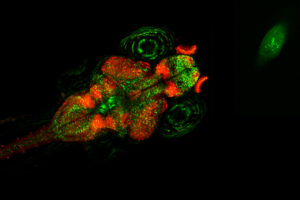
A new study from the Goodhill Lab finds the genetic variant underlying an autism disorder causes changes in fish’s social behavior, preference in visual environment, and neural activity.
Read graduate student Katie Lefton’s article in Science Today about astrocytes, microglia, and satellite glial cells.
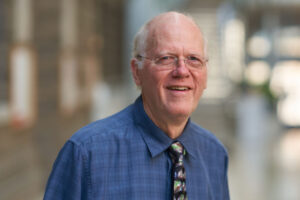
Matthew Glasser, a former graduate student of Van Essen and currently an Instructor in Radiology, also made the 2022 list.