Learn about the latest news and events going on in the department. You can also follow us on X @WashUMedNeuro and LinkedIn.

WashU among top 10 academic institutions from Nature Index (Links to an external site)
The global rankings reflect research publication output in the health sciences.
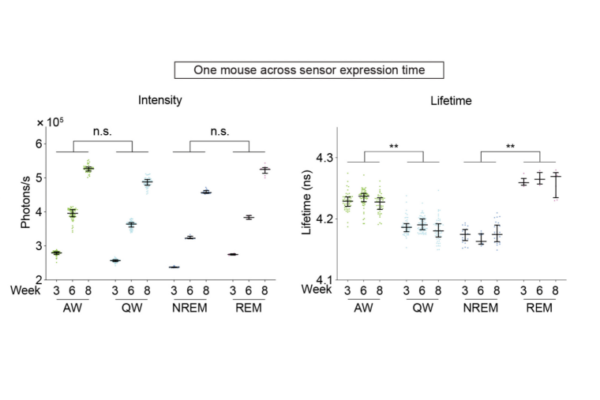
Fluorescence lifetime imaging captures neuromodulator dynamics at multiple time scales
A new study from Yao Chen’s lab reveals that some fluorescent-intensity–based sensors also show fluorescence lifetime responses, expanding observations of neuromodulator activity over time and distance.

Tiny tweaks to neurons can rewire animal motion (Links to an external site)
Read Dr. Martha Bagnall’s comments in Quanta on a new study capturing the role of a potassium channel in the rattlesnake’s rattle.

Mary Bartlett Bunge, 92, Dies; Pioneer in Spinal Injury Treatment (Links to an external site)
New York Times obituary of former Washington University professor Dr. Mary Bartlett Bunge

Key regulator of decision-making pinpointed in brain (Links to an external site)
Findings shed light on mental illnesses, including obsessive-compulsive disorder, anxiety

How does waste leave the brain? (Links to an external site)
Professor Krikor Dikranian and Assistant Professor Peter Bayguinov among authors of new study in Nature describing a route that serves as a passageway to clear fluid waste from brain.

Introducing a new conceptual framework for astrocyte function
In Nature Neuroscience, Thomas Papouin and colleagues describe the role of astrocytes in “contextual guidance.”
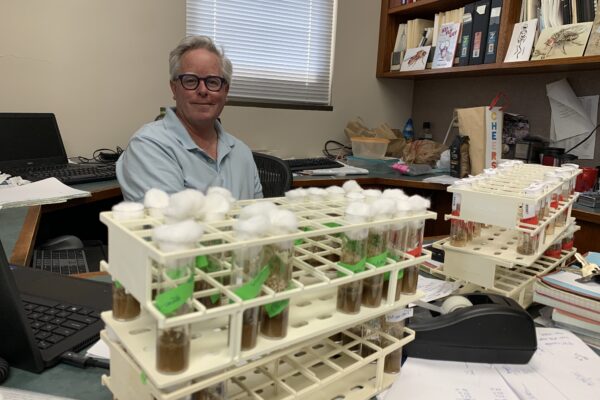
Sleep disruption—whether from loss of sleep or “social jet lag”—affects thermoregulation
Fruit flies seek out warmer temperatures when they experience sleep deprivation or fragmentation or when faced with a shifted sleep schedule, similar to when people stay up late and sleep in on the weekend.
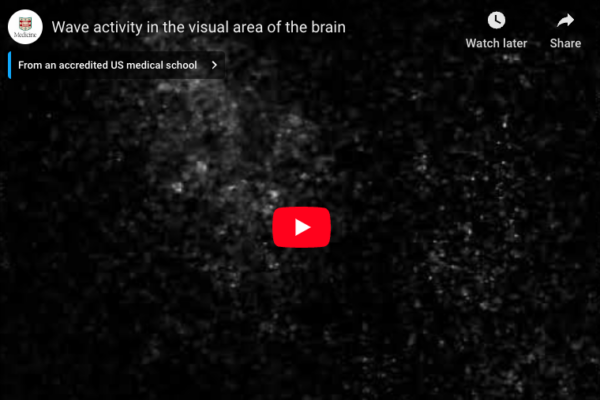
How do developing brains assemble and organize themselves? (Links to an external site)
Brain areas are marked by distinct activity patterns very early, marsupial study published in PNAS by the Richards Lab shows.

Gabel Lab identifies molecular links between Sotos and Tatton Brown Rahman Syndromes
The two rare genetic diseases, which have striking phenotypic similarities, lead to similar downstream consequences on gene activity in neurons of mouse models.
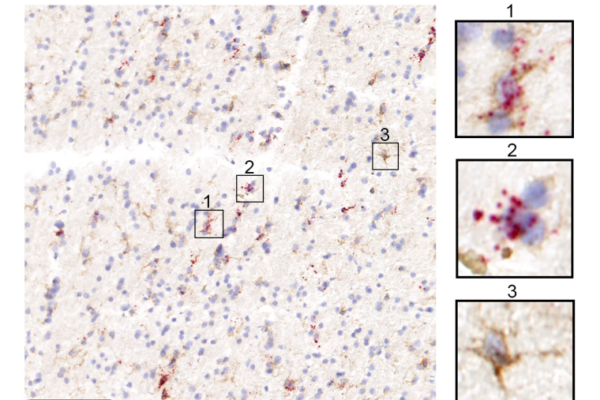
Transcriptomic changes in glia linked to specific neurodegenerative diseases
A study of human brain tissue by Guoyan Zhao and colleagues identifies genetic activity in microglia and astrocytes related neurodegeneration and neuropathology among individuals with Alzheimer or Parkinson disease.
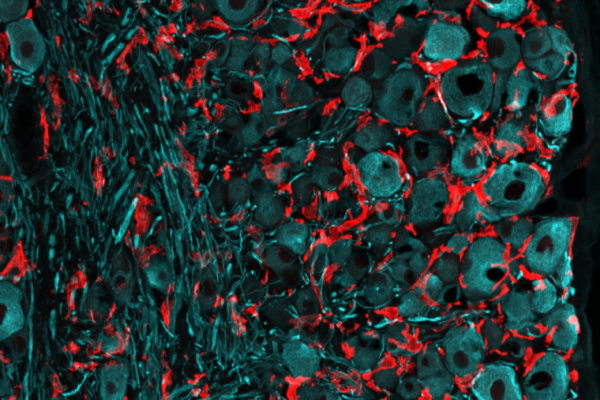
Cavalli Lab describes immune cells that promote nerve regeneration
After an injury to dorsal root ganglion neurons adjacent to the spinal cord, resident macrophages work with satellite glial cells to heal damaged axons.
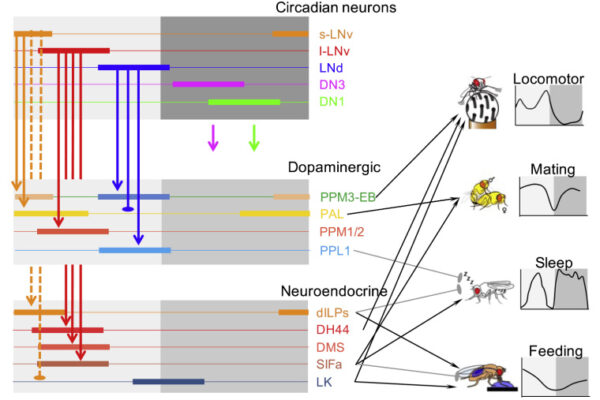
Daily activity schedules mapped in the Drosophila brain
Cellular circuits downstream from circadian pacemaker neurons direct normal daily rhythms of feeding, mating and sleep.
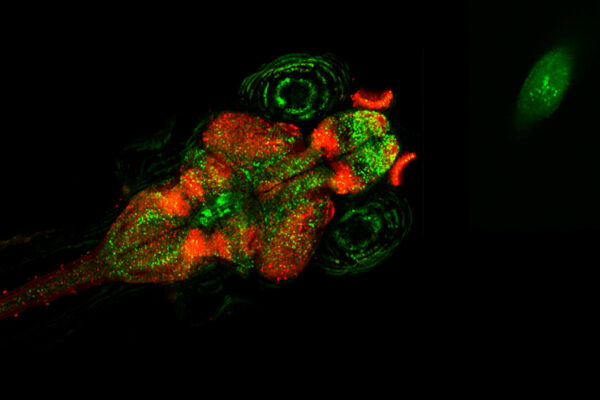
Zebrafish advance as a model organism for Fragile X Syndrome
A new study from the Goodhill Lab finds the genetic variant underlying an autism disorder causes changes in fish’s social behavior, preference in visual environment, and neural activity.
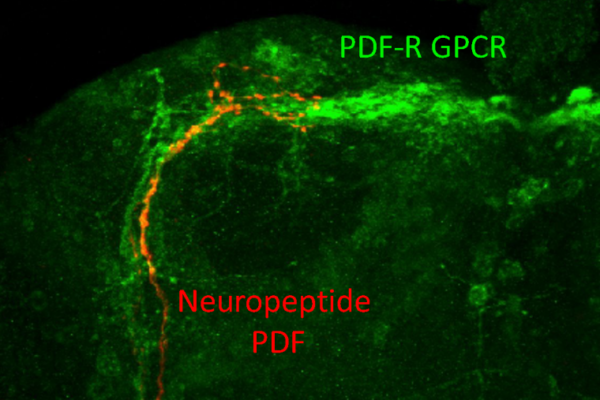
Taghert Lab identifies off switch for a set of circadian clock–controlled behaviors in flies
Phosphorylation of a receptor controls how messages from the neuropeptide PDF—which influence dawn and dusk activities in Drosophila—are curtailed on a daily basis to adapt the circadian clock to changing daylight.
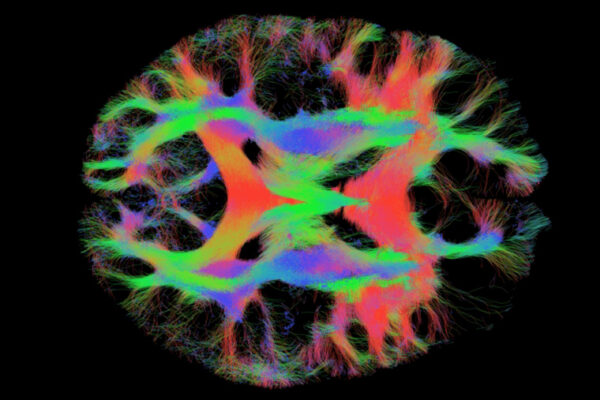
People missing all or part of the connection between their brain hemispheres are more persuadable
A study of individuals with congenital corpus callosum dysgenesis suggests they face social difficulties due to being more easily influenced and less aware of being tricked.
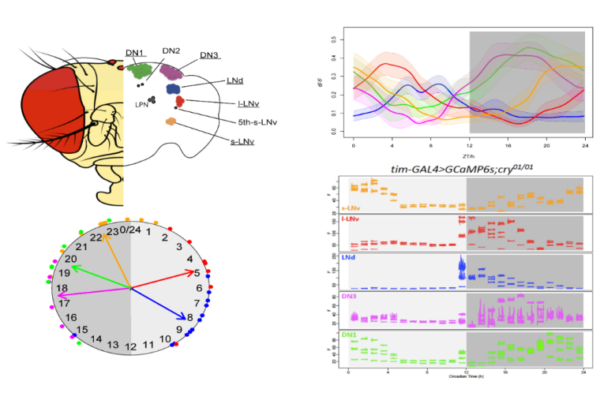
Circadian pacemaker neurons exhibit two linked calcium cycles
The slow and fast rhythms reflect distinct cellular processes yet nevertheless have a co-phasic relationship.
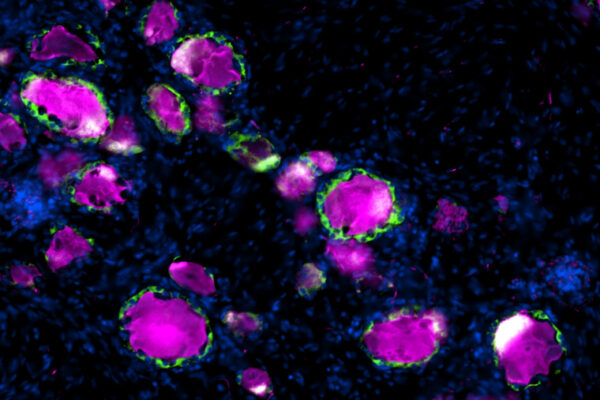
Study finds key similarities between rodent and human satellite glial cells
SGCs have been the subject of intense scrutiny for their involvement in inflammation, pain and nerve injury. The results confirm that rodents are a reliable model for translational research on these cells.